Category Archives: Tallinn Black Night Film Festival

Tallinn 2025 interview: Golshifteh Farahani – The Dragon Within

When Golshifteh Farahani walks into a room, she carries with her more than fame. She carries the weight of an entire cinematic tradition, the still-burning fire of exile, and the quiet strength of a woman who has rebuilt herself in multiple countries, languages, and artistic worlds. PÖFF has welcomed its share of icons, but this year one of the brightest presences belonged to a woman in her forties — luminous, restless, and utterly alive.

Farahani remains one of world cinema’s most compelling figures — a performer shaped by exile, sharpened by experience, and sustained by an unyielding artistic hunger. In Oh, What Happy Days! she delivers a performance born from instinct rather than preparation, chaos rather than control — a rare reminder of what cinema can reveal when the actor steps aside and something deeper speaks through them.

Below is a conversation between Farahani and Milani Perera at the 29th Tallinn Black Nights Film Festival — an intimate drift across memory, identity, exile, and the unpredictable alchemy of performance.

MP: This is your first visit to Tallinn, despite many invitations over the years. How did it feel coming to the festival at last?

GF: It felt like finally arriving in a place I was meant to visit years ago. I’ve been invited many times, but filmmaking always intervened. Being here now, walking through the festival atmosphere, feels like meeting a memory I never lived — something familiar yet completely new.

MP: Your upbringing was deeply artistic — a home of painters, actors, writers, musicians. How did this constellation shape the performer you became?

GF: In my family, art was not a profession. It was a way of existing. Being an artist was the highest expression of being human. Yet acting was the one thing they tried to protect me from. They knew its sacrifices, its uncertainties, and in Iran, its dangers. I was trained as a pianist and nearly moved to Vienna. But cinema found me early — when I was fourteen — and something irreversible happened. From that point on, film became my second language.

MP: Your first major award came at 14 — a historic moment. How did that recognition echo within your family?

GF: My parents were furious while I was shooting that film. My father wasn’t speaking to me; my mother was crying, convinced I would abandon music. But the night of the award changed everything. I remember Tehran covered in snow, my father and me running across a bridge toward the Opera House. For the first time, I saw pride break through his resistance. It was as if that moment revealed a truth to both of us — that cinema had claimed me, whether we had planned it or not.

MP: There’s a long-standing debate among cinephiles: do actors choose their roles, or do roles choose them? Where do you stand?

GF: I think it’s a dialogue between the two. When you look across an actor’s career, you often see a gravitational pull — certain themes that keep returning, as if the universe is handing them back in new forms. For me, after leaving Iran, I found myself drawn toward characters in states of emancipation, transformation, defiance. Later I stepped into warrior figures — women in combat, both literal and metaphorical. Now… I feel life pushing me toward comedy, toward a lighter rebellion. Perhaps that is the current the universe is sending back to me.

MP: You’ve spoken openly about your exile. For many artists, exile becomes both a wound and a studio. What did it become for you?

GF: Exile became a limb I lost — and a limb I learned to live without. When Ridley Scott cast me, sanctions stopped the contract, and suddenly I became a political suspect. My passport was taken. Interrogations, uncertainty, fear — it lasted months. Eventually I left. And exile… Exile is an invisible scar that becomes part of your identity. You become a handicapped soul — but handicapped souls can still become champions. Eighteen years later, I feel strangely at home everywhere. Perhaps that is the final shape of exile — to belong to the world as opposed to one place.

MP: Your new film Oh, What Happy Days! brought together actors from inside Iran and actors in exile — something nearly impossible. What drew you to this project?

GF: It felt like a call I couldn’t refuse. To stand on the same screen with compatriots inside Iran — after so many years away — was a gift. I didn’t even finish the script before filming. I was discovering the story as the camera rolled. At one point, something wild erupted — a dragon; a range of emotions I didn’t anticipate: laughter, rage, chaos, release. I struck the table so hard I injured my hands. But it felt honest, instinctive, necessary — like a truth coming out of hiding.

MP: Was this experience shaped by your collaboration with director Homayoun Ghanizadeh?

GF: Absolutely. Homayoun builds spaces that disarm the actor — spaces where ego, preparation, and control fall away. He wanted presence, not performance. Because of that, I could react without thinking, feel without shaping, fall without fear. He created the platform, and the dragon walked out.

MP: As programmers, we were struck by the film’s formal disorientation — its chaotic conversations, tonal fractures, sudden shifts. Yet that dissonance becomes the point. Do you see this as a step toward comedy for you?

GF: Comedy has always existed on the edge of tragedy. Perhaps after years of playing women in battle, it is time to laugh — not in dismissal, but in defiance. Sometimes laughter is the last honest weapon. If this film is a doorway into comedic work, I’m ready.

MP: Golshifteh, thank you for this conversation — and for the rawness and clarity you bring to cinema. Tallinn already feels different with you in it.

GF: Thank you. I feel the butterflies — and now I must run to the press conference!

As she rushed toward the waiting press conference, the energy she left in the room lingered: the sense that some artists do not merely act in films — they live entire histories within them.

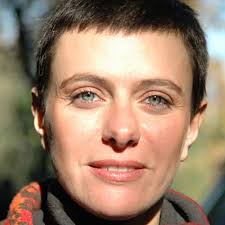
(c) Photo copyright: Liis Reimann 

Originally appeared in The International Cinephile Society

Tallinn 2025 interview: Richard Hawkins & Sarah Cunningham

On a quiet Tallinn afternoon, just hours after the world premiere of Think of England at the 29th Tallinn Black Nights Festival, I sat down with director Richard Hawkins and cinematographer Sarah Cunningham — a duo whose working chemistry is as vivid as the cinematic worlds they construct. The conversation unfolded like the film itself: brave, playful, and delightfully unpredictable.

MP: Before we get to the premiere, Richard — how do you see yourself as a filmmaker, and as an individual?

RH: Honestly? Badly defined. But the truth is simpler: I’m an adventurer. As a person and as a filmmaker, I love adventures. I don’t think I can say it any better than that.

SC: And that’s not just talk. One of the first things Richard told me was, “Be brave.” Every morning, he reminded me — if there are two choices, take the brave one. That set the tone for everything we did.

MP: Sarah, what is it like to work with a director whose instinct is to “be brave”? How did that shape your own identity as a cinematographer?

SC: It was liberating — and energising. Filmmaking is full of pressure: money, time, a big machine around you constantly asking, “Are you sure?” Richard protected a space where instinct mattered more than fear. I’ve always had an adventurer’s core — moving to unfamiliar countries, throwing myself into unknown environments — but as a cinematographer, especially as a woman, you’re often expected to be the safe pair of hands. Working with Richard allowed that adventurousness to come forward again. It wasn’t him “giving” me freedom — it was a collaboration, a shared authorship. We built the film’s grammar together.

MP: Richard, you mentioned bravery. On set, what does bravery look like in practice?

RH: The default instinct in filmmaking is to defend. You think you’re there to protect money, time, and reputation. But real filmmaking is the opposite — you must attack. You have to stay on the offensive creatively. And that is exhausting, but that’s where the life of the film is.

MP: Let’s talk about your working relationship. How would you describe the director–cinematographer partnership on this film?

RH: A director may pretend his closest relationship is with the actors. But in truth, the closest relationship is with the cinematographer. It’s a double act — like tennis doubles. If the communication breaks, everything collapses.

SC: We met first thing in the morning, last thing at night. It really did feel like a battle at times — but the kind where your ally is right beside you, matching your energy. That connection kept the film alive.

MP: How did your creative process begin? How did you build the film’s visual language together?

SC: Funnily enough, we discovered we live seventeen minutes apart in rural England. We’d sit with pencil and paper, sketching camera plans. Watch a clip from a 1940s film. Take a walk. Return to the table, re-draw everything. Eat iced buns. Then repeat. It was wonderfully old-school — and it allowed the visual language to emerge through conversation rather than prescription.

RH: Exactly. None of this was about executing a predetermined plan. We didn’t know exactly where we’d end up. That uncertainty was part of the design.

MP: The film shifts between stiff, classical black-and-white and intimate handheld sequences in colour. Why did you choose this dual grammar?

SC: From the start, we held the option to “jump the line” — to cross from the technicians’ perspective into the actors’ inner world. When we crossed it, everything changed: the camera’s rhythm, its grammar, its emotional texture. In black and white, we used the formal stiffness of 1940s cinema. In colour, we leaned into handheld vulnerability.

RH: It’s everything film school tells you not to do. Hard cuts between aesthetic worlds. Sudden emotional displacement. It feels “incorrect.” But that jarring leap is the emotional truth of the moment.

MP: Sarah, the 1940s aesthetic is unusually authentic. Tell me about the lighting choices.

SC: I limited myself to only direct lighting — no soft lights. Cinematographers in the 1940s worked with tungsten lamps and shadows, not infinite correction tools. Modern cinematography fears shadows, but shadows give images depth. So I embraced them — front lighting, direct lighting, sculptural lighting. It was radical, restrictive, and incredibly exciting. I wanted to work with the bravery of that era, not recreate it politely.

RH: What Sarah created is a true homage — not nostalgia, not imitation, but a reinvention of that period grammar.

MP: Editing such a film must have been a battlefield. What happened in the edit suite?

RH: Our editor is brilliant — and horrified. A lot of our material simply didn’t fit his trained sense of “correct editing.” Entire sections he initially removed were, for us, essential. So the edit became a negotiation: his conventional logic versus our deliberate anarchy.

SC: Editors guard comprehension, but life is full of things we don’t fully comprehend. Some mystery, some disorientation — that’s where cinema breathes.

MP: Now, Richard — why this story? Where is your journey in this film?

RH: I was drawn to the idea of collective identity — people who paused their former lives and became something else temporarily. COVID made me think about that: how we all gave up our previous selves for a strange suspended moment. The war was similar. These characters all come from previous lives put on hold. So the film became a collective story, not a personal one.

MP: And what finally convinces you — both of you — that the film’s bravery holds together?

RH: Being lost is part of any adventure that matters. If everything is safe and predictable, you may as well take the bus.

SC: Exposure is where the art is. Once you strip away modern armour — the soft lights, the safe choices — you’re vulnerable. But that vulnerability is exactly what makes the film breathe.

Think of England emerges as a work of bravery, dualities, risk, and deep creative kinship — a film born from instinctive trust, formal disruption, and a shared commitment to stepping across cinematic lines. It is, in every sense, an adventure — one undertaken together.

Originally appeared in The International Cinephile Society.

(c) Image copyright: Erlend Štaub

Tallinn 2025 interview: Eeva Mägi (Mo Papa)

Before the winners of the 29th Tallinn Black Nights Film Festival were announced, I spoke with filmmaker Eeva Mägi, whose Mo Papa would later receive a Special Jury Mention. Even without knowing the result, it was clear her film came from a place beyond craft — a place of intuition, emotional instinct, and an almost bodily understanding of storytelling.

Mägi works with fragments, impulses, and sensations rather than strict design. She speaks of filmmaking as a shared emotional current, shaped in deep collaboration with her actor Jarmo Reha and her DoP Sten-Johan Lill, and guided by the mythic frameworks of Joseph Campbell. The result is cinema that feels lived rather than constructed — a film that breathes.

What follows is a conversation where Mägi’s reflections deepen the quiet emotional power of Mo Papa.

MP: Let’s begin with Mo Papa. What moved you to tell a story this personal, this emotionally exposed?

EM: I didn’t aim for bravery — just honesty. Some stories grow so insistently inside you that eventually they need form. Mo Papa came from fragments: emotions, gestures, memories that wouldn’t rest. When something shapes you deeply, you try to understand it — and cinema becomes the safest distance from which to do that. It allowed me to look without flinching.

MP: Your filmmaking is known for its observational sensitivity. How did your documentary background shape this film?

EM: The documentary teaches you how to listen — not superficially, but with full attention. It trains you to notice the breath before the sentence, the tension in a room, the weight of a silence. When I moved into fiction, I carried that training with me. I didn’t want to polish reality — I wanted to honour it. Mo Papa is fiction, yes, but made with a documentary heart: patient, attentive, open to the unexpected.

MP: You’ve spoken about intuition being central to your process. How did intuition guide this film?

EM: Intuition led everything. I don’t begin with structure or theory — I begin with a feeling in my body. Something precognitive. I sense the rhythm before I know the story. With Mo Papa, intuition guided me to the moments that mattered: where to hold a shot, when to move, when to withdraw. And my collaborators trusted that instinctual drive. That trust was essential.

MP: Your collaboration with the actor and cinematographer feels particularly intimate on screen. How did you build that dynamic?

EM: We created an environment where vulnerability was safe. The actors weren’t performing; they were allowing themselves to be seen. And the DoP wasn’t merely capturing an image — she was entering the emotional space with them. We followed each other’s impulses. Sometimes the camera moved because the actor’s breath shifted. Sometimes an actor reacted because the camera lingered. It was a loop of presence and responsiveness. That is why the film breathes — because we were breathing together.

MP: Your films often explore bodily memory, grief, and the weight of unspoken emotion. Do you see Mo Papa as a continuation of these themes?

EM: Yes. All my films ask the same question: what do we carry without knowing it? Trauma, love, silence — they settle into the body. In earlier works, I approached these themes through form, through hybrid techniques. With Mo Papa I came closer to the source. It is more direct, more exposed, but still driven by the same pulse.

MP: How do you navigate working with such personal material while maintaining artistic distance?

EM: By remembering that film is not therapy. It’s art. The emotions are real, but the moment they become cinema, they belong to something larger than myself. I shape them, but I don’t unload them. That distance prevents the work from becoming self-serving. Cinema needs generosity, not confession.

MP: You mentioned being inspired by Joseph Campbell. How did his ideas inform your creative process?

EM: Campbell helped me understand that personal stories can hold archetypal weight. That what feels intimate can resonate universally. When I was shaping the film, his ideas reminded me to follow the emotional truth rather than a narrative formula. The mythic structure wasn’t a blueprint — it was a reminder that our private wounds often mirror collective ones.

MP: Tallinn feels like an emotional landscape in the film, not just a backdrop. How do you see the city?

EM: Tallinn is layered — historically, emotionally. I filmed it the way I experience it: comforting one moment, wounding the next. Not the postcard version, but the lived one. In Mo Papa, the city becomes another presence in the family — holding what the characters cannot say.

MP: And after Mo Papa, where is your intuition leading you next?

EM: To two projects: Mo Amor and Mo HuntMo Amor continues the emotional movement of Mo Papa — not as a sequel, but as another chapter in exploring identity, love, and the echoes of self. Mo Hunt goes deeper into darkness: a ballerina, a surrogate, a man in a crisis of faith. It’s psychological, visceral. Both projects scare me in different ways. And that’s why I need to make them.

Speaking with Eeva Mägi reveals a filmmaker who trusts her instincts more than convention, who builds cinema from breath, silence, and emotional presence. Mo Papa may have received its Special Jury Mention after this interview, but its power was already evident — a film assembled from fragments of truth, shaped through intuitive collaboration, and grounded in a rare emotional intelligence.

First Appeared in the International Cinephile Society

photo credit Sohvi Viik- Kalluste

Tallinn 2025 interview: Hugo Diego Garcia & Lorenzo Bentivoglio (Vache Folle)

Milani Perera sat down with Hugo Diego Garcia and Lorenzo Bentivoglio at the 29th Tallinn Black Nights Film Festival, where their debut feature premiered in the festival’s “Rebels With a Cause” section. Only a few hours after that world premiere, Vache Folle travelled across the ocean for its Latin American premiere at the Mar del Plata International Film Festival, where it went on to win both the Astor Piazzolla Award for Best Actor and the Astor Piazzolla Special Jury Award — a remarkable feat for two self-taught outsiders who built their film from scratch.

What follows is a conversation with two debut directors who entered filmmaking not through institutions or permission, but through necessity. Hugo and Lorenzo are the kind of underdog artists who turn rejection into propulsion — filmmakers who rely on instinct rather than formal training, and who refuse to let industry walls define the scope of their imagination. Hugo and Lorenzo are not simply debut filmmakers; they are architects of their own cinematic language. With Vache Folle, they’ve announced themselves — loudly, defiantly — as rebels who refuse to wait for permission. The world is now watching. And they are just getting started. In this conversation, they revisit the beginnings of their creative partnership, the self-forged process behind the film, the making of their visceral protagonist Cédric, and what lies ahead for their cinematic universe.

MP: What first stirred the desire to become storytellers?

HG: Storytelling wasn’t a dream — it was refuge. I grew up in a village where filmmaking didn’t exist. My parents were in business and human resources. Cinema belonged to another universe. My brother and I watched films obsessively; we performed scenes, I drew manga. But we never imagined it as a profession. Later, I studied law, boxed, and tried my hand at theatre. Nothing aligned. The world kept saying “no,” so I learned to say “yes” to myself.

LB: I was like a child possessed by imagination — copying movies, reenacting battles. School wasn’t for me, acting school even less. I understood early on that I learn through experience, simply by doing something. So I filmed, I failed, I knew. Meeting Hugo sealed it — we recognised the same hunger.

MP: Without film school, how did you build your craft?

LB: Curiosity and survival. We shot scenes on cheap cameras. Edited for months. Devoured films. Observed people. Mistake after mistake — until the mistakes became style.

HG: When you have no money, you replace resources with instinct. We learned cinematography because no one else could shoot. We learned editing because no one else could cut. Everything we failed at became something we understood deeply.

MP: How did your partnership evolve into co-directing?

HG: I cast Lorenzo in a short about my father’s life. He wasn’t just acting — he was shaping the film. He saw angles that I didn’t. By the second short, he was doing cinematography and co-creating scenes with me. So when Vache Folle came, it was obvious — we should merge visions.

LB: Hugo is the origin and architecture. I am instinct and motion. I direct through emotion — through feeling the pulse of a scene. Together, we form the same heartbeat.

MP: How did you create Cédric — this beaten, tender, violent anti-hero?

HG: He’s a displaced version of me. Same age, same landscape, but pushed down harder by life. I borrowed my own mistakes and turned the volume up. We wanted a character shaped by love and violence at once — a poetic Rambo in a French realist world.

LB: I know Hugo. Working with him is like directing the part of myself I never speak about. Cédric came from that fusion — two emotional worlds merging into one man. He’s fragile and dangerous, innocent and flawed. He’s us.

MP: Why did you choose to make him a former soldier abandoned by the state?

HG: Because it’s a universal wound. A soldier is trained to serve — and then discarded. It’s not politics, but humanity. Someone built for intensity but returned to a world where intensity has no place. Narrative-wise, it creates stakes: trauma, competence, danger. Artistically, it anchors him in a tragic paradox.

LB: He’s a guy trying his best — but society moves too fast. He becomes a criminal because there’s no other road left open. That’s the real tragedy.

MP: Take me into the creation of the film. How did Vache Folle begin?

HG: COVID, a breakup, and no money. I moved from LA back to a mountain cabin with Lorenzo, my brother Malo, and our friend David. We trained like boxers during the day, created like possessed artists at night. I wrote the script fast — a month of pure emotion. One night, I asked: “Shall we make a feature?“, and they all said yes; the next morning, we bought a camera. That was our film school.

LB: We had nothing but desire. Out-of-focus frames, wrong lenses — we corrected, improved, and refined. We grew as the film grew.

MP: The edit took years. What finally brought the film to completion?

HG: We almost killed it, almost turned it into a music video. We almost abandoned it, but Lorenzo refused to surrender. Then, slowly, we found allies — mentors, producers, people who saw our raw cut and said, “There is cinema here. Don’t stop.” The editor of Titane, Jean-Christophe Bouzy, gave us crucial guidance. Suddenly, the film could breathe again.

MP: Where do you stand now, after this journey?

LB: Hugo builds the universe, I give it movement and heartbeat. I act, I shoot, I direct with him — it’s symbiosis.

HG: And Cédric is us. I wrote him from my contradictions; Lorenzo shaped him from his instincts. It’s collaboration at its most intimate.

MP: What comes next for you both?

HG: Even with awards, we remain outsiders. No agent, no distributor, no system behind us. But festivals opened a door. As actors, we have upcoming projects. Together, we co-produced a gritty police short directed by FGKO. And we’re developing our next feature — in the same universe as Vache Folle. Our goal now is to sharpen our signature — a blend of violence and tenderness, realism and myth.

LB: We’ll keep breaking rules. Keep filming. Keep fighting. This is only the beginning.

First appeared in the International Cinephile Society

Film Review: Little Jaffna (2024) by Lawrence Valin

Little Jaffna is a gripping crime drama that offers a colourful and insightful perspective on the French Tamil diaspora.

“Little Jaffna“, Lawrence Valin‘s stunning directorial debut, is a gripping crime drama that offers a colourful and insightful perspective on the French Tamil diaspora. Premiering at the prestigious Venice Critics’ Week, this film quickly grabbed international cinephines’ attention for its daring voice and naïve cinematic expression. It was also screened at the Toronto Film Festival and is set to be screened at Tallinn Black Night’s Film Festival under the Best of The Fest banner.

At the film’s heart is Michael (portrayed by Valin himself), a young police officer thrust into a morally ambiguous mission. Tasked with infiltrating a local gang, he faces the daunting challenge of reconciling his duty as an officer with his deep-rooted cultural heritage and personal connections. This internal struggle forms the film’s crux, as Valin masterfully intertwines personal dilemmas with broader sociopolitical themes, highlighting the clash between personal, cultural and historical identities.

The film’s setting in La Chapelle, or Little Jaffna, named after the capital of the Northern province of Sri Lanka, brings a plethora of cultural nuances to the narrative. This vibrant neighbourhood serves as a microcosm of the Tamil experience in France, where cultural memories are alive, and the weight of political history is palpable. Valin’s representation of this community is enriched by his heritage, allowing for a depth of emotion often lacking in narratives about the diaspora produced in France. “Little Jaffna” is intimate and sociopolitical. By keeping the exact calendar year and month rather ambiguous, Valin plays on the influence of political struggle in Sri Lanka and the perpetual French and Tamil cultural differences as a carving on a stone in shaping the lives of Little Jaffna inhabitants.

Valin is not a newcomer to directing or acting; his two short films, “Little Jaffna (2017)” and “The Loyal Man(2020)” are his first ventures into cinema and seeds that grew into a flourishing tree as “Little Jaffna” in 2024. Valin received the ADAMI award for “The Loyal Man” for his stunning performance. He brings the same brilliance to this film, further facilitated by the young and vibrant dynamism of the young gangsters. The new frontrunners like Vela Ramamoorthy and Puviraj Ravindran, whose naive brilliance and seasoned performances by famous stars like Radhika Sarathkumar create a memorable cinematic experience.

“Little Jaffna” is visually captivating and blends the flavour of South Indian mainstream cinema with the city-scape film language of modern French cinema. The cinematographer Maxence Lemonnier, in perfect harmony with Valin, brings a unique visual style to the film. This hybridized visual language evokes the emotional weight of Kollywood films, incorporates surrealism and poignant imagery, and will captivate the audience’s nostalgia and even challenge it. It’s a celebration of both cultures, creating a rich tapestry that enhances the storytelling and leaves the audience visually stimulated.

Raw yet subtle, robust and engaging, “Little Jaffna” has already left a unique stamp on international cinema.

First appeared in the Asian Movie Pulse.

Film Review: Empire of the Rabbits (2024) by Seyfettin Tokmak

A Heartbreaking Tale of Childhood and Exploitation

“Empire of the Rabbits” is a haunting exploration of childhood innocence lost to poverty and exploitation. Premiering at the 28th Tallinn Black Nights Film Festival, the film is a powerful, slow-burning drama that explores the harsh realities faced by children trapped in a world they cannot escape.


Set in a nameless, desolate countryside, the film follows young Musa (Alpay Kaya) and his father, Beko (Sermet Yesil). After his wife’s accidental death, Beko struggles to survive. With few options left, he decides to exploit his son to gain a government disability pension. To do so, his son must pretend to be disabled. His teacher in this tragic game is Nergis (Perla Palamutcuogulları), a girl of his age also forced to mimic disability. Together, they form a bond in their shared suffering, creating a fantasy world to escape their grim reality. 

Musa’s dream is to build a rabbit empire, a refuge for rabbits he saves from traps and hound races. This empire is more than a child’s fantasy—it becomes their only escape from the adult world that seeks to control and use them. The film is a poignant tale of resistance, showing how two children use imagination to fight against a system that exploits them.

The narrative of “Empire of the Rabbits” is slow-paced, with few dialogues and mostly “dumb” silence of protagonist that is sharply contrasted with adults’ manipulative and exploitive harsh words. In a film where the narrative development blends well with semiotics, compositions and cinematography, the sparse use of dialogue is refreshing and respectful towards the audience. Spectators can take their own time to think and absorb the feature that unfolds before their eyes.

From the very opening scene, the director brings a sense of uneasiness that expands into gloom throughout the film. The plot is poignantly painted with skilful use of semiotics. The innocence and helplessness of rabbits are compared to all the children in the movie who are forced to adopt a life of handicappedness. Not only the rabbits but the hounds are also victims; their defiance and vagrancy are punished with death. It brings ominous foreshadowing of an unexpected ending.

The cinematography by Claudia Becerril Bulos perfectly complements the film’s tone. Long, wide shots of barren landscapes fill the screen, emphasizing the desolation surrounding the characters. The empty, skeletal trees are a visual metaphor for the children—both have potential for life but are stifled by their environment. The use of a greenish-yellow filter amplifies the film’s somber mood, heightening the sense of decay and hopelessness.

Alpay Kaya’s performance as Musa is a standout. His portrayal of the quiet, burdened boy is powerful. Kaya conveys a deep sense of emotional weight through his expressions, showing the internal conflict of a child caught between fantasy and the harshness of reality. His eyes, filled with pain, communicate far more than words ever could. Kaya’s mature performance adds a level of authenticity to the film, making Musa’s struggle feel all the more real.

Tokmak’s direction is sensitive and empathetic, particularly toward the child actors. His handling of their emotions is delicate, capturing both their vulnerability and resilience. The director is known for addressing social issues affecting children, and this film is no exception. It serves as a potent commentary on child exploitation, the cycle of poverty, and the way society often abandons its most vulnerable members.

“Empire of the Rabbits” is a must-see for anyone interested slow and meditative cinema that is socially conscious. Tokmak’s direction and Kaya’s performance elevate this film into something truly special—a poignant, sobering reflection on the exploitation of children and the loss of innocence.

First appeared in the Asian Movie Pulse.

Film Review: Pyre (2024) by Vinod Kapri

A poignant ballad of love and hope, the movie delves deep into its characters’ emotional landscapes, inviting the audience to connect and empathize.

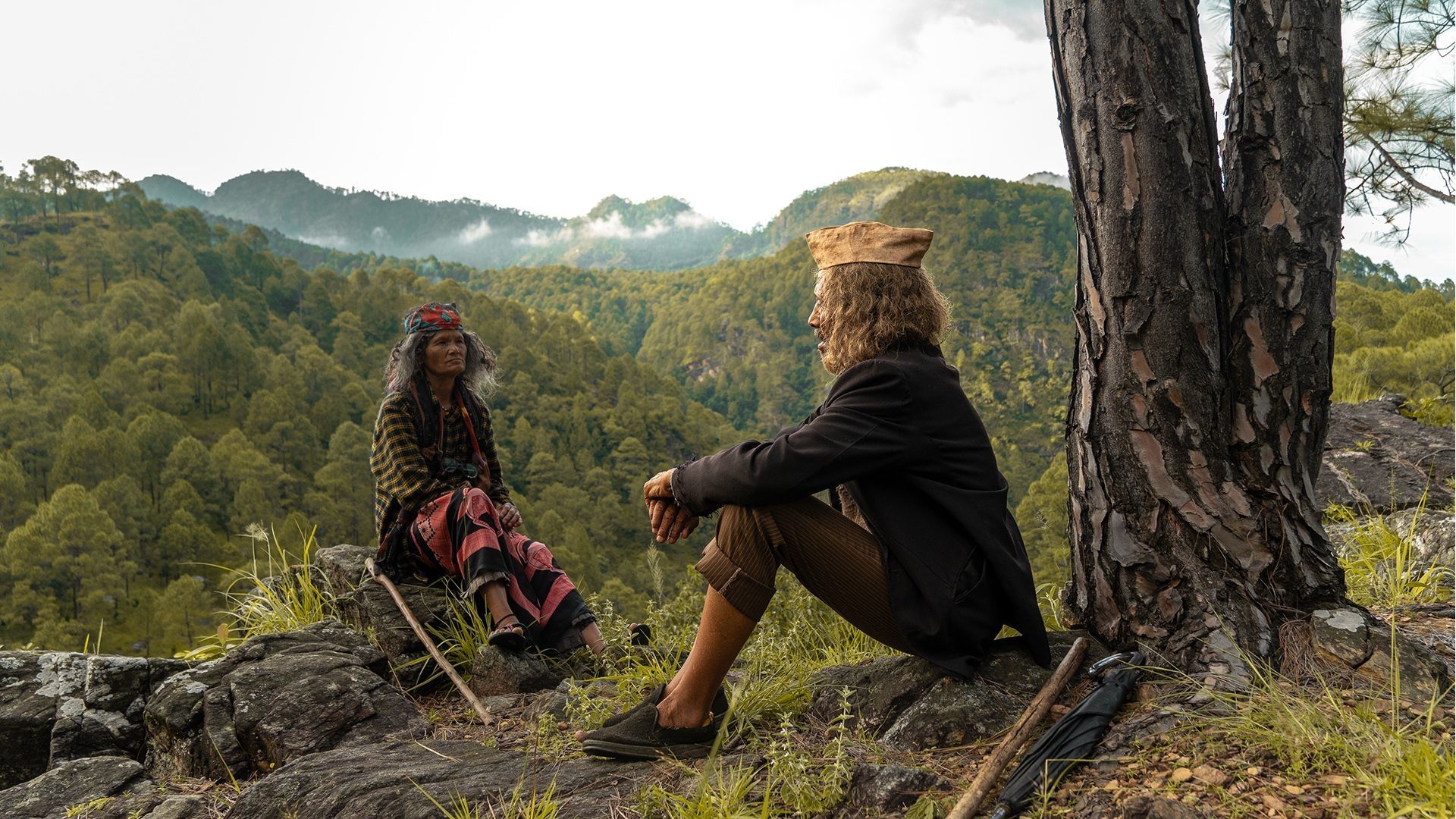
Vinod Kapri, renowned for his powerful portrayal of society’s overlooked individuals, returns with a profound meditation on love, loss, and isolation in “Pyre“. Kapri’s latest work shines with a poignant intensity that echoes his impactful films “1232 KMs” (2015) and “Pihu” (2016). Premiering at the 28th Black Night’s Film Festival, “Pyre” is a moving exploration of an elderly couple’s fragile existence in a remote Himalayan village, delving deep into the depths of their love and the weight of their loss.

Padam Singh (Padam Singh) and Tulsi (Heera Devi), an 80-year-old couple, remain in a world that the younger generation has abandoned. Their days pass in quiet routines, their loneliness masked by fleeting moments of humour. Haunted by the absence of their son, their hope is reignited by a letter promising his return. When he finally arrives, the reunion shatters their expectations, leading them into a painful new reality. The film’s devastating climax evokes a deep, emotional response, leaving the audience with a profound empathy.

Kapri’s mastery lies in his ability to cast non-professional actors, capturing raw emotion in every frame. Despite their inexperience with the camera, the performers bring a heartwarming authenticity to their roles. The film’s pacing and direction guide them through delicate emotional landscapes, creating an international resonance that transcends cultural barriers. The finely crafted script draws the viewer in, keeping them emotionally tethered to the couple’s journey. As the final scene unfolds, the audience is left teary-eyed, the sadness lingering long after the credits roll.

The film’s beauty is amplified by the artistry of Manash Bhattacharya, the director of photography. His sweeping shots of the Himalayan landscape mirror the couple’s isolation, the vast, winding trails offering space for the audience to reflect. The close-ups of the characters—though unpolished in their acting—capture the rawness of their lives and struggles. At times, the expansive mountains seem to dwarf them. At the same time, in other moments, the crumbling, dilapidated spaces echo their emotional decay. Bhattacharya’s careful use of light adds a realistic touch, grounding the story in the simplicity of the couple’s world.

The music, composed by Mychael Danna’s “Life of Pi”, “Moneyball”, and Amritha Vaz (twice nominated for the Annie Award), gently elevates the emotional weight of the film. At times, the music swells to underscore the story’s sadness. Still, the sweeping grandeur of nature around the characters ultimately steals the show. Like the couple’s love, the landscape speaks volumes in its quiet majesty. The soft undercurrent music amplifies the emotional journey, enveloping the audience in a cocoon of tenderness and heartbreak.

It is a haunting, beautiful story that resonates deeply, leaving a lasting impact that lingers long after the screen fades to black. It is a film that speaks to the heart, capturing the fragility of life and the resilience of love in a world that is slowly fading away.

First appeared in the Asian Movie Pulse.

Tallinn Black Nights 2024 interview: Dechen Roder (I, the Song)

Dechen Roder (1980) is one of Bhutan’s pioneering female directors. She began her filmmaking career in 2009 with her production company, Dakinny Productions, making documentaries and short videos. Her debut feature, “Honeygiver Among the Dogs (2017), premiered at the Busan International Film Festival and won three awards at the Fribourg International Film Festival. It also became the first Bhutanese film nominated for the Pacific Screen Award. Roder also co-founded Bhutan’s only film festival, the Beskop Tshechu Film Festival.

Her latest feature, “I, the Song,” premiered at the 28th Tallinn Black Night’s Film Festival under the Critic’s Pick Competition, where she was awarded Best Director.

I had a chance to have a heart-to-heart conversation with her at the 28th Tallinn Black Night Film Festival in Estonia about her filmmaking career and her latest film, ” I, the Song. “

Congratulations on winning Best Director at the Critics’ Pick section i for “I, the Song”How do you feel about it?

Thank you so much! I’m thrilled and a bit surprised, to be honest. It’s a great honour, and I’m deeply grateful to the festival for this recognition. But really, this win belongs to the entire team—the cast, crew, and everyone involved. Filmmaking is a collaborative effort, and I’m excited to share this journey with you all.

I’d love to hear about your filmmaking journey. How did your passion for storytelling begin?

My path into filmmaking wasn’t a straight line—it was more of a series of small moments that led me here. I’ve loved stories my whole life, which started with my mother. She’s been a storyteller as long as I can remember, passing down folktales and preserving Bhutan’s oral tradition. In Bhutan, storytelling has always been a communal activity, and that tradition has really shaped my work. In my 20s, when Bhutan’s film industry began to emerge, I realized film could be the perfect medium to carry on that tradition. We didn’t have a long history of analogue cinema, so we jumped into digital filmmaking. It felt natural to pursue this, blending my love of storytelling with the possibilities of the cinematic form.

Was there a particular moment when you decided filmmaking was your path?

For me, it was always about the transformative power of film. Cinema lets you go beyond just telling a story—it can open up a whole universe and allow you to connect with an audience on a deeper level. Growing up in Bhutan, no formal film education was available, so I studied history and international relations. But when I began writing my thesis, I realized there was a way to approach storytelling academically. Yet, I quickly realized that cinema’s reach was far more significant. It’s not just about ideas but how to communicate them to a broader audience.

After realizing your calling, where did you learn the craft of filmmaking?

I’ve been making films for nearly 20 years, and I want to stress that learning is a continuous process in this field. Every film I’ve worked on has been a lesson—whether it’s a feature, a documentary, or a short video project. I’ve worked on various projects in Bhutan, and each one has taught me something new about the craft. The process is ongoing; every new film is an opportunity to improve and refine my skills. I’m excited to share this journey with you.

Let’s delve into the title of your film, I, The Song. Despite their apparent differences, the characters Nima and Meto have intertwined stories. How does the title resonate with the narrative?

The idea of doppelgangers is central to the film. Nima and Meto look strikingly similar, which mirrors a song’s theme. Much like a story, a song doesn’t truly belong to anyone. It evolves, is shared, and takes on new meanings with each retelling. In that sense, Nima and Meto start as two separate individuals, but their identities blur and merge by the film’s end. They are distinct yet inseparable—just like a song that belongs to everyone and no one at the same time.

The visual style in “I, The Song” is quite striking, particularly your use of colour and light. Nima’s world feels cold and muted, while Meto’s is bathed in warm, golden light. Please elaborate on the significance of this choice.

That was a very intentional decision. My cinematographer, Rangoli Agarwal, and I discussed how to reflect the characters’ inner worlds through the visual tone. Nima’s world is cool, almost desaturated, which mirrors her perspective on life. She sees everything in black and white, so her surroundings, her costumes, and even the lighting are all in line with that. On the other hand, Meto is full of warmth and life, so we used much more saturated colours for her. The colours shift as the film progresses, and Nima’s life intertwines with Meto’s. The colder tones start to blend into warmer shades, symbolizing the change in Nima as she embraces a new perspective. Rangoli, who has an academic cinematography background, helped bring these ideas to life on screen.

That’s a fascinating approach. On a similar note, why did you narrate Meto’s story from a third-person perspective rather than giving her a direct voice?

I had many people tell me they wished Meto’s story could have been told from her own point of view. But for me, it was important to present her as a kind of memory—fragments of her life seen through other people’s eyes. The bright, almost ethereal tones we use to portray her convey that she’s seen as a memory, not entirely tangible but rather a collection of other people’s perceptions of her. In that sense, Meto’s story is never fully hers—it’s shaped by how others remember her.

Lastly, I would like to ask about the incredible actress Tandin Bidha, who plays both Nima and Meto. How did you find her for these roles?

Tandin is a massive name in Bhutanese commercial cinema—she’s starred in over 40 films. But this is her first time in an indie film, and the roles she plays in “I, The Song” are very different from anything she’s done before. I knew she was the perfect fit for these complex characters when I saw her. Nima and Meto are polar opposites, and Tandin brought a depth and range to both roles that I hadn’t seen in anyone else. Her ability to bring these characters to life, with all their contrasts and contradictions, made her the ideal choice.

Her performance is vital to the film’s success. Thank you so much for sharing your insights with us today. “I, The Song” is a beautiful, thought-provoking film; we can’t wait to see what you do next!

Thank you! It’s been a pleasure talking to you. I’m excited for the audience to experience the film and grateful for the support.

First appeared in Asian Movie Pulse.

Tallinn Black Nights 2024 interview: Jerome Yoo (Mongrels)

Jerome Yoo, the debut director of Mongrels, has captured international attention after winning the prestigious FIPRESCI Award and a Special Mention from the Debut Jury at the 28th Tallinn Black Nights Film Festival (PÖFF). His powerful debut – a multi-layered character study of a grief-stricken Korean family adapting to life in 1990s rural Canada – has made waves among cinephiles. Known for his evocative storytelling and surreal visual style, Yoo has already earned accolades for his short films Gong Ju and Idols Never Die, which have graced film festivals worldwide. With Mongrels, Yoo solidifies his place as one of the most exciting new voices in cinema today.

Yoo and I had an amicable conversation about getting in touch with Korean culture, starting off filmmaking and developing Mongrels at PÖFF.

MP: This is your first feature; when did it all start?
JY: My career didn’t start with this intention. When I was growing up I never dreamt about becoming a filmmaker. My journey started in theatre, and later I moved into acting, picking up minor roles in shows on Netflix, Amazon, and Apple. I was lucky enough to grow up in Vancouver, a hub for American film productions, so I was exposed to the industry early on. Over time I became more interested in writing and began crafting short films. At first I didn’t know anything about screenwriting, but I started reading a lot of screenplays and plays, which made me learn about narrative structure and plot points. When I finished my scripts I pitched them to directors, but they couldn’t identify with my narratives, and they suggested that I direct my own scripts.

MP: As an actor-turned-director, how do you tackle the challenges of directing?
JY
: Honestly, at first I didn’t fully understand what directing entailed. I was just curious and eager to learn. But once I took on my first short film, I quickly discovered that it’s all about understanding the story and conveying that vision to your team. One thing I was comfortable with was working with actors. But I relied heavily on my talented crew regarding other aspects, like cinematography or lighting. Filmmaking is a deeply collaborative process. It’s like building a sandcastle with a team – everyone contributes their expertise to bring the story to life. After finishing my first short I was overwhelmed with this accomplishment. It was like a lightbulb turned on, and I knew this was what I wanted to do for the rest of my life.

MP: Your first feature is one of the most talked about films this year at PÖFF. What was the inspiration behind Mongrels?
JY
: The inspiration for Mongrels is very personal. Like most of my work it’s rooted in my experiences, growing up between two cultures. I was born in South Korea but grew up in Canada, and that sense of being torn between two worlds shaped me. When I was younger I struggled with identity, constantly feeling like I didn’t fully belong to either culture. However, as I grew older I started visiting Korea more often, and that’s when I began connecting with my roots. It was like the pieces of a puzzle started coming together. Mongrels reflects, most probably, my final cathartic journey. It’s more than just a film; it’s a way of processing my inner conflict. This film is deeply personal to me and my family, even more so than my previous work. It felt like I had to make this film. If I didn’t, I wouldn’t be able to move forward in my career.

MP: The term ‘mongrels’ has a unique connotation in society. Why did you use this term as your title?
JY
: The title came to me almost instinctively, driven by a single image – the final scene. This scene, in which three characters stand together, lost and searching for their place in a foreign land, lingered in my mind. I then thought about how dogs, especially mongrels, are often misunderstood and seen as outcasts. This resonated with the family in the film – misunderstood, caught between cultures, and striving to find their place. The term ‘mongrel’ also carries a certain rawness, a wildness, which aligns with the film’s tone. These characters, much like mongrel dogs, are on a quest for belonging, and the title felt like the perfect metaphor to capture their journey.

MP: You just said the start of your film was the final scene. What is the significance of this?
JY
: The final scene, where the family stands on the riverbank and Hajoon howls, is really important to me. Hajoon’s howl is a pivotal moment. It’s his way of announcing to the world that he exists and is not afraid of the future. He’s the most torn throughout the film – caught between his father’s traditional values, his role as a protector to his sister, and his desire to fit in and explore adolescence. That’s why it had to be Hajoon who howled. It’s a moment of courage, a declaration of moving forward. The howl is a symbolic gesture of hope, strength, and the will to embrace the unknown. For me, it represents resilience, which seeps into other family members as they join in with Hajoon in howling.

MP: I would like to look at the narrative structure. It is divided into three chapters, each focusing on one family member. Was this format decided from the beginning or did it evolve during the creative process?
JY
: I wanted to tell this story this way. Each chapter is essential to understanding the story’s emotional core. Each one explores the innermost struggles and pains of the family members. The chapters have different aspect ratios to reflect the character’s perspective. The first chapter focuses on the father, and we wanted to make the space feel cramped and suffocating – reflecting how he sees the world, especially as someone who’s been uprooted from his home in Korea. By the last chapter, centered on Hana, there’s a sense of innocence and wonder. Her world is more dreamlike, with lots of positive space. The narrative structure, with each chapter focusing on a different family member, allows us to delve deep into their individual experiences and emotions, providing a comprehensive understanding of the family’s dynamics and struggles.

MP: When I watched your film, the first thing that struck me was how lush and green the scenes were. They’re different from the typical dark tones we often associate with South Korean cinema, also in the first mini-plot. Can you talk about the visual choices?
JY
: I’m glad you noticed that. We wanted the house to feel like a prison, a place of suffocation. It’s only sometimes a safe space for the characters; sometimes, it feels more like a cage. But as we move through the chapters, the lighting changes to reflect the emotional state of the characters. In contrast, the outside world, especially the forests, is lush and vibrant. The dogs in the film are misunderstood in their natural habitat, just like the family is misunderstood. The greenery represents the idea of freedom, of escape. It’s meant to show that there is potential for hope and safety outside their home’s confines. I think the Pacific Northwest has a natural beauty, and I wanted to capture that. In terms of tone, this visual style reflects my voice as a filmmaker, which has been shaped by my experiences in Canada, even though I’m Korean. I gravitate toward more colourful, vibrant storytelling.

MP: You started the interview thinking this could be your final visual expression of your personal stories. Would you like to share some insights about your next project?
JY
: I’m currently working on an adaptation of a graphic novel. I’ve always been drawn to fantasy and folktales, and even in Mongrels you can see hints of fantasy stories like The Pied Piper. I am a fan of folktales and fantasy genres. There is a whole world of intertextuality in this which strongly appeals to me. My next project will delve into mythological creatures and explore a whole new world of symbolism. I’m really excited to bring that vision to life.

First appeared in the International Cinephile Society.

Tallinn Black Nights 2024 interview: Independent Voices of Georgia

At the 28th Tallinn Black Nights Film Festival (PÖFF) the spotlight shone on Georgian independent filmmakers under the theme “Independent Voices of Georgia.” This showcase offered a unique glimpse of a nation in transition, with Georgian filmmakers bravely exploring themes of independence, resilience, and innovation. Their films reflect the country’s evolving identity and unwavering commitment to powerful, unfiltered storytelling. From confronting historical wounds to navigating an uncertain future, Georgian cinema remains a force for voices that refuse to be silenced. The Georgian Film Institute (GFI), established in 2019 by leading filmmakers and industry professionals, emerged as a direct response to increasing government interference in the arts.

This year, Lana Gogoberidze, one of Georgia’s most celebrated directors, was honored with a Lifetime Achievement Award at the festival. At 96, she continues to inspire, presenting two iconic films to a new generation of viewers.

The featured films in the Georgian Spotlight section included a diverse range of works, each with its own unique perspective and storytelling style: Irine Jordania’s Air Blue Silk, Elene Mikaberidze’s Blueberry Dreams, Tato Kotetishvili’s Holy Electricity, Akaki Popkhadze’s In the Name of Blood, and Lana Gogoberidze’s Mother and Daughter, or the Night is Never Complete. Each of these films offers a unique and compelling narrative that is sure to captivate audiences.

I spoke candidly with three strong and independent female Georgian voices, Lana Gogoberidze, Irine Jordania, and Elene Mikaberidze.

Lana Gogoberidze

MP: Your films have a powerful narrative and a distinct visual language. They are often centered around assertive female protagonists who resist the status quo. How did this type of character emerge in your work?
LG: The roots of these characters run deep in my own life. At the age of seven I was separated from my parents and left to navigate a world without my loved ones. But even as a child I instinctively refused to be a passive victim of circumstance. I resisted, and that spirit became the foundation of my identity. Resistance wasn’t a choice – it naturally emerged within me. Two passions have always defined my life: poetry and cinema. From an early age, I was surrounded by intellectuals – directors, painters, writers – who gathered at my childhood home to recite poetry about resistance, power, and the strength of words. I remember my mother and her friends passionately discussing these themes. As I grew older I began writing poetry, even translating works I admired, like Edgar Allan Poe’s Annabel Lee. For me, poetry wasn’t just about beauty but a tool for defiance and self-expression.

MP: So when did you decide to pursue filmmaking?
LG: Filmmaking has always felt like part of my inheritance. My mother was a filmmaker, and growing up with that legacy left a strong mark on me. I always knew I wanted to follow in her footsteps. However, the social and political climate at the time made it difficult. I couldn’t go to Moscow to study filmmaking, so I enrolled at the University of Tbilisi instead. It wasn’t until Stalin’s death that I could finally travel to Moscow and pursue my dream of becoming a filmmaker.

MP: The Blue Room and your mother’s influence play significant roles in your work. Can you tell us more about them?
LG
: The Blue Room was the heart of my childhood home. Before my mother was sent to the Gulag, it was the gathering place for her circle of friends – artists, poets, thinkers. Here, I first encountered the power of words as I watched grown men recite poetry with passion and conviction. That room shaped who I am. It symbolizes my mother’s spirit, her love for poetry, and her zest for life. When she returned from the Gulag after ten years, she was different – almost like a stranger. But over time she became the center of our lives again. Through her, I witnessed the incredible resilience of women. Despite everything she endured, she remained kind, generous, and unbroken. She embodied the strength of a woman who refused to let hardship dim her soul. The 20th century was shaped by men, but women like her must tell the story of our resilience and our view of the world.

MP: What does ‘resistance’ mean to you in personal and cinematic terms?
LG: My mother was a true example of resistance. Even in the face of immense suffering, she never let her circumstances define her or her relationships with others. She always remained kind, never letting negativity taint her spirit. For her, literature became a tool of protest – a way to voice the desire for freedom and independence. She believed that resistance comes in many forms, from protecting your inner peace to using art as a sharp, emotional force to challenge oppression.

MP: Georgia’s political landscape is evolving, with increasing tensions surrounding pro-Russian policies and threats to freedom of speech. How do you feel about the current situation?
LG
: It’s a deeply troubling time for Georgia, but we will not return to the dark days of Soviet-era censorship. We are stronger now, and our desire for a free, independent Georgia remains unwavering. We want to be part of the European Union, and I am confident we can achieve this. People can now take to the streets and express their view – something unthinkable during Soviet rule – which gives me hope. Our collective will is our greatest strength.

MP: What message would you give to young filmmakers and artists who fear censorship or restrictions in today’s climate?
LG
: We must stand together. While we may not face the same kind of censorship we did during the Soviet era, the potential for restrictions still exists. We must remain united. We need to take action, whether it’s through protest, writing, or creating art. I still do this today. Our greatest gift is solidarity. We need each other now more than ever – within Georgia and with our friends in different nations. We can ensure our voices are heard, and our freedom remains intact.

Irine Jordania

MP: How does it feel to have your debut feature screened for an international audience?
IJ: I’m overjoyed. It’s an incredibly special moment, both for me and my team. We’ve spent over two and a half years making this film, and the process wasn’t easy, especially with the challenges posed by the National Film Center’s restrictions and censorship. Finally seeing the film on-screen and witnessing the audience’s response is truly rewarding. At a time like this, international platforms are crucial for us. We need spaces to share our voices, which are often stifled back home.

MP: Can you elaborate on what you mean by censorship from the National Film Center?
IJ: The National Film Center is the key institution for filmmakers in Georgia, especially for independent voices. It’s the primary source of funding and authorization. But in recent years this has changed dramatically. There’s been a clear shift toward restrictions and censorship for filmmakers, artists, academics, museums, and even journalists. Since October of this year, with the implementation of pro-Russian policies, the government has rolled out tools that curtail freedom of thought and expression. It’s a difficult time for anyone who values creative and intellectual freedom.

MP: What was your inspiration for this film?
IJ: The film began with a simple voice message from a relative. You’ll hear some of those voice messages woven into the narrative. The filmmaking process itself was quite unconventional. We didn’t start with a traditional script; instead, the story unfolded organically as my team and I interacted. Our actors brought personal experiences into their roles, so it felt like a collaborative, evolving process from the beginning.

MP: How did your cinematographer contribute to the film’s unique aesthetic?
IJ: We wanted to portray the city as minimalistic – almost like a fleeting glance. The cinematography was driven by the characters’ perspective of the city. We chose random, seemingly inconsequential shots to create a sense of detachment, like passing glimpses of everyday life. The visual language of the film is loose and open-ended, with the narrative taking a back seat. This approach allows the audience to fill in the gaps and interpret the deeper meaning without relying on too many dialogues or overt storytelling. It’s about creating space for the viewer to engage more personally.

MP: How do you raise funds for your films in a climate where independent voices are suppressed?
IJ: It’s not easy. Funding is scarce, but we’ve secured some support from the Georgian National Film Fund. We also seek financial assistance through competitions and partnerships with organizations like the Georgian Broadcaster. Additionally, some producers, such as Elene Margvelashvili, genuinely champion independent voices and have been crucial in helping us bring our vision to life.

MP: As a final question, do you have a message for other independent filmmakers?
IJ: Absolutely. My message is simple: I stand with my people, and we will continue to fight for justice and freedom. We must support each other, especially in times like these when our voices are being suppressed. Together, we can push back against censorship and continue to create meaningful, impactful work.

Elene Mikaberidze

MP: What inspired you to pursue filmmaking?
EM: From an early age, I was completely enchanted by the magic of cinema. I would collect movie tickets and magazine cut-outs – small treasures that sparked my obsession with films. However, life took me down a different path for a while. I focused on studying film and nationalism, particularly exploring Georgian cinema, war, and identity. But my true filmmaking journey began after a trip to visit my grandmother. The journey was eye-opening; I had to pass through three military checkpoints and witness the harsh realities of life on the border, especially in the occupied regions. I interviewed families and absorbed everything I could. When I returned to Belgium I planned to write an academic paper, but I found myself writing a script instead. That was when I knew I had to follow my passion for filmmaking.

MP: How did you transition to practice in filmmaking?
EM: It wasn’t an easy transition, but it felt inevitable. First, I had to learn Georgian since I didn’t speak the language at all – I was raised speaking French. Once I became fluent I returned to Georgia and began working on film sets. Luckily I found a producer at Nushi Films who believed in me. I started as a production assistant from the bottom, learning everything on the job. Slowly, I worked my way up, moving into set and costume design and gaining invaluable experience on larger productions. I honed my craft with each project until I was ready to make my own films. My first short film, Cadillac, was a major step forward, followed by Blueberry Dreams.

MP: Can you tell us about the production of Blueberry Dreams, your latest documentary?
EMBlueberry Dreams was a long journey. Initially, I wanted to film it in 2019 with my young cousins who live near the border. However, due to political unrest and the pandemic, everything stopped. The checkpoints were closed, and I felt completely stuck. That’s when I reached out to my producer, and soon after I met Elene Margvelashvili from Parachute Films. Together, we worked tirelessly to refine the script. In 2020, we submitted it to the Georgian National Film Center and were thrilled to win the competition. However, the pandemic delayed everything, and the waiting felt agonizing. Eventually, I travelled as far as I could to the border, where I met countless families and children, interviewing them about their lives. That experience reignited something inside me. Amid the chaos, my DOP and I found ourselves on a blueberry farm where we met two families, much like my cousins, struggling with their own stories. It was there, on that farm, that the film truly began to take shape. The political backdrop of their lives and their struggles sparked my curiosity and became the core of the documentary. The production faced numerous challenges, especially funding. Aside from the Georgian National Film Center’s competition win, the film was co-produced in Belgium and France. The process took five years, but it was a journey I wouldn’t trade for anything.

MP: What other challenges did you face during production?
EM: As I mentioned, the initial funding came from the Georgian National Film Center, but all independent filmmakers must go through them. While it’s a vital resource, the funding comes with many restrictions. For example, any delay in the production schedule or deviation from the original script can lead to fines. I was fined for using an extra tripod and painting something white that wasn’t planned initially! The bureaucratic hurdles were frustrating, but we navigated them as best we could. It’s all part of the struggle of making a film in such a restricted environment.

MP: What does the future look like for Georgian independent filmmakers?
EM: One thing that gives me hope is that we are not alone. There are 450 filmmakers in Georgia; together, we are a community. We support each other, share experiences, and fight for our right to tell our stories. I’m optimistic that we will be able to push for changes in European legislation, allowing us to enter co-productions without needing state funding. It’s a tough road ahead, but I’m confident that, despite the challenges, we are in a good situation. We are still fortunate to be alive, express ourselves publicly, and create art—even in the face of adversity.

First published in the International Cinephile Society in 2024