Category Archives: Tallinn Black Night Film Festival

Tallinn Black Nights 2024 interview: Jon Bass (Carole & Grey)

Jon Bass’s directorial debut, Carole & Grey, premiered at the 28th Tallinn Black Nights Film Festival. The film was showcased in the special section “Rebel with a Cause”, which highlights innovative, boundary-pushing films that challenge conventional cinematic norms. This section is dedicated to showcasing experimental works that take risks, both in form and message, presenting daring new visions from filmmakers across the globe. I sat down with the helmer, Jon Bass, about his introduction to filmmaking and the unique cinematic journey in his debut film.

MP: You’ve had a diverse journey in the film industry, starting as an actor. How did that experience shape your approach to directing? Your unique perspective on acting has undoubtedly given you a fascinating insight into filmmaking. Could you share more about this?
JB: Acting definitely gave me a unique perspective on filmmaking. I was fortunate to work on big studio productions like Baywatch and smaller indie films. From that, I learned that large-scale productions often face challenges due to too many voices in the decision-making process, which can sometimes compromise the quality of the final product.

Conversely, smaller films have a closer-knit team focused on the story and quality. When the Hollywood writers’ strike hit, I saw how many projects were stalled indefinitely, and it really disillusioned me with the studio system. This disillusionment led me to take control of my creative process and make something on a smaller budget. That’s how I came to make Carole & Grey, a film that allowed me to be involved in every part of the process from start to end.

MP: You mentioned a small budget – $10,000 – for this film. Did that limitation push you to be more innovative in your approach?
JB
: Absolutely. The budget forced me to be resourceful, but I saw it as an opportunity to break free from traditional filmmaking constraints. To be free in our expression, which actually worked in our favour. I wasn’t concerned with making the most beautiful shots or adhering to cinematic norms. It was more important to me that the film was organic and spontaneous, and the limitations allowed for that. We shot the entire movie vertically on an iPhone, which some people may balk at as ‘not real cinema,’ but for me, it was about capturing the raw energy and immediacy of the story in a way that’s accessible and ‘modern.’

MP: Regarding the film’s visual approach, why choose to shoot vertically with an iPhone? It’s a bold choice, especially given the industry’s preference for traditional cinematic formats.
JB
: The decision to shoot vertically was intentional. I wanted to create a film that people could watch on their phones in a familiar format. I didn’t expect the film to make it into festivals, but I’m glad I stuck to my vision. The vertical format is about something other than following tradition but finding a medium that works for the story I wanted to tell. This film isn’t concerned with conventional notions of ‘cinematic quality.’ There are moments when shots are out of focus or pixelated, and that’s by design. It’s all part of expressing the chaos and energy of the film, and it adds a layer of authenticity. Plus, it makes the movie more relatable to audiences who are used to watching everything on their phones, primarily through platforms like TikTok.

MP: You’ve described Carole & Grey as a reflection of your ADHD, with rapid shifts in tone. Can you elaborate on how these shifts affect the film’s structure and narrative?
JB
: The film’s tone mirrors how my brain works – it’s constantly jumping from one feeling to another. One moment we’re having a serious conversation, and the next there’s humour, followed by moments of excitement or anxiety. The film feels like a whirlwind of different emotions and topics. I wrote 30 scenes, and with a runtime of just 66 minutes, I had the freedom to let the film shift between them quickly. The structure is meant to reflect the chaos and unpredictability of life, especially in a city like New York where everything is always in motion. It was a conscious decision to keep the audience on their toes, just like the characters are navigating their day.

MP: Your film shares similarities with the mumblecore movement, especially its dialogue-driven, character-centric style. Were filmmakers like Lynn Shelton an influence on your work?
JB
: Lynn Shelton was a significant influence on me, particularly her use of dialogue and the way she brought out natural, often messy human interactions. I had the privilege of working with her before she passed, and that experience really changed how I view filmmaking. The mumblecore genre, with its emphasis on real, unpolished conversations, was something I really admired. I wanted to capture that raw, natural feel but with a twist. So I added elements of magical realism – with ordinary and extraordinary characters like the shapeshifter, soothsayer, and witch. These characters serve to elevate the grounded, everyday moments and make the world feel more fantastical. It’s a way of blurring the line between what’s real and imagined, which is central to the story.

MP: You’ve also mentioned that the film is set against the backdrop of New York City. How does the city itself play into the themes of the movie?
JB
: New York is integral to the film, not just as a backdrop but as a reflection of the characters’ chaotic inner worlds. The city never stops moving, it’s a place where everything happens simultaneously. You’re on a ferry one moment, then on a bike, and before you know it, you’re running down a busy street. It’s the perfect setting for a story about shifting perspectives and emotional highs and lows. The constant movement of New York mirrors the unpredictable flow of thoughts and emotions that the characters and I experience. It’s a city where anything can happen at any time, precisely what I wanted to convey through the film’s unpredictable tone and rapid pace.

MP: The film feels heightened, especially with the magical elements. Is this a metaphor for Grey’s perception of the world, or is it something more universal?
JB
: The magical realism isn’t limited to just Grey’s perspective. It’s a reflection of the world through the eyes of everyone in the story – Carole, Grey, and even the people they encounter. I wanted to show that our world can feel surreal and full of possibility, especially in a city like New York where the ordinary and extraordinary coexist. The shapeshifter, the soothsayer, and the witch could appear at any moment; is it real, is it imagined, or a bit of both? It’s not just Grey’s world, it’s everyone’s world, and anyone could encounter magic in their everyday life if they’re open to it. It’s about embracing chaos and the unknown.

MP: Finally, the film’s narrative structure and visual choices are unconventional. Who do you see as the ideal audience for Carole & Grey?
JB
Carole & Grey isn’t a film for everyone, and I’m okay with that. It’s designed for people who are open to a different kind of experience – those who appreciate films that move quickly, feel raw and challenge traditional storytelling. This may not be your film if you’re looking for a standard narrative with polished shots and a predictable plot. But if you enjoy stories that feel fresh, chaotic, and unpredictable, this film speaks directly to that audience. It’s for those who embrace imperfection and like to experience something new and exciting, much like life.

First published in The International Cinephile Society in 2024
Tallinn Black Nights 2024 interview: Viktor Taus (Girl America)

Viktor Tauš’s latest feature Girl America is a visual feast that dazzles the audience with its striking compositions, absurd characterization, and explosions of colours. The film brought energy to the gloomy November skies in Tallinn, lighting up the city with bold and imaginative storytelling. Its international premiere was a truly special event that kicked off with a moving segment from a Broadway-style show featuring 31 orphans from the film. The performance resonated deeply with the audience, setting the tone for an unforgettable screening.

In a casual yet insightful conversation with Milani Perera, Tauš shared his vision behind the film, reflecting on the powerful themes of hope, survival, and resilience that drive the story. Girl America is as much an emotional journey as a visual spectacle, leaving a lasting impression on all fortunate enough to experience it.

MP: What led you to become a filmmaker?
VT: It was never my choice – I always knew I wanted to make films. As a kid, movies were my escape, a safe space where I could understand the world from a distance. They allowed me to explore human emotions and relationships, especially since I was too afraid to experience them directly. Over time I realized that filmmaking isn’t just about mastering technical skills or storytelling – it’s about understanding the human condition. It’s a way to engage with the world and explore what makes people tick. The passion for film turned into a deep love for human nature itself. This journey was not just a professional one, but a deeply emotional one as well.

MP: What was your inspiration for being a storyteller?
VT: One of my earliest inspirations came from a Czech clown, Boris Hybner, who had a show called Some Likes Horror. It was a beautiful combination of comedy and melancholy, where you’d feel a deep sense of loneliness in the middle of the laughter. He could capture raw, vulnerable emotions and communicate them to the audience through visuals that impacted me. His ability to capture and convey raw emotions through his performances was truly inspiring. I realized that film and theatre could be powerful tools to express the complexity of human emotions, and it inspired me to use this medium to tell my own stories.

MP: You started your career as an actor. How did that transition to directing come about?
VT: It was always about the characters. Acting allowed me to explore that, but it was through directing that I could shape a whole world around a character. My first film was directly inspired by Boris Hybner’s teachings. He encouraged me to care for an elderly woman in her 90s as part of a personal journey. I spent two years with her, helping her with daily tasks, and we developed a close bond. She had been isolated in her apartment for 12 years, and I saw her honest and uncensored loneliness throughout our time together. During this time, I learned how to tell someone’s story through dialogue, presence, space, and emotions. The film I made from this experience, Eleanor Rigby from the Lesser Quarter, became my first real film school. I sold everything to make it, even my furniture. Fortunately the film was successful, and it taught me that truly understanding a character means immersing yourself in their world.

MP: Girl America is a deeply personal film for you. Can you tell us more about the inspiration behind it?
VT: The story of Girl America began 25 years ago when I met a woman we called Amerikanka. She had a significant impact on my life. We were both living on the streets of Prague after the Velvet Revolution. At that time we were part of the first group of orphans living independently. She became a source of strength for me, a beacon of hope in an empty world. Despite her challenging circumstances, she always maintained a pure heart, and her ability to hold onto her integrity amidst everything fascinated me. We became like brother and sister, sharing stories and supporting each other. Her story, her resilience, and her deep sense of hope became something I wanted to understand and explore more. It gave me a sense of purpose when I needed it most, and I decided to spend the next two decades learning about her life and how her story shaped who she became, and recreating this through art.

MP: How did the play version of Girl America evolve into a film?
VT: After years of thinking about the story, we first staged Girl America as a play. There were some setbacks, like the lead actress becoming pregnant, but we continued experimenting. We performed the play in 14 different visual versions, exploring a different approach to the same text each time. That experience helped me understand how much the environment and visual storytelling can shape the emotional impact of a story. When we brought this approach to film I collaborated with Jan Kadlec, the set and costume designer, and we continued this journey together, creating a unique look that brought the world of Girl America to life. Knowing that more than 100,000 people have seen the stage play in Czech is essential.

MP: Developing the script must have been a long process. What were the key themes you focused on?
VT: It was a journey of discovery. I kept asking myself what ‘family’ meant for the protagonist in the early stages. Was it her biological family? The orphanages she grew up in? Or the circus community that took her in? As the project developed, I realized that these questions didn’t drive the story. The fundamental core of her character is hope – her ability to believe in something more significant than the circumstances around her. This belief allowed her to act according to her moral compass, not as a reaction to her chaotic environment. As I worked on the script, I began to understand that hope wasn’t just a theme – it was the driving force behind everything she did. The film isn’t just about her struggle; it’s about how hope can transform a person, even when the world seems against them. The story was also adapted into a novel by David Jarab, and while the film is based on that, it is also my personal interpretation of her journey.

MP: The film’s visual style is very unique. Why did you choose a surrealistic approach?
VT: The film is structured to reconstruct memories which aren’t linear or clear-cut. We all remember our pasts through emotions and fragments. Whether from a privileged or disadvantaged background, we recall key moments in flashes, through colours, sounds, smells, and feelings. By telling Emma’s story this way we hoped to create an emotional truth that would resonate with everyone. We didn’t want to present her story as a straightforward narrative; instead, we wanted to evoke the experience of memory itself – how it’s shaped by emotion, personal interpretation, and how we piece together moments from our past. This approach, which includes a surrealistic visual style, made her story more relatable and universal, transcending her specific circumstances.

MP: Behind this film, there is a strong social protest. Can you tell us more about the societal issues that Girl America addresses and how it serves as a protest?
VT: I was an orphan, and my experiences parallel those of the protagonist in Girl America. The Czech orphanage system has been broken for decades – it’s fragmented across five different ministries, which means no one is fully accountable for the children in care. This lack of responsibility leads to neglect, even though there are many dedicated individuals in the system doing their best. I wanted to use Girl America to highlight childcare issues in the country, and the film reflects my frustration with the government’s lack of action. The conditions haven’t significantly improved in over 70 years, and the system remains inadequate. I hope the film sparks a conversation about the urgent need for better care, improved living conditions for children in the system, and more comprehensive support for families facing financial hardship.

Initially published in The International Cinephile Society.

Tallinn Black Nights 2024 : Javier Cutrona ( Fishgirl)

In 2024, the Critics’ Picks section of the Tallinn Black Nights Festival  two Latin American films captivated audiences with their bold, surreal storytelling. One of them was Javier Cutrona’s Fishgirl, which received the Jury’s Special Mention. In this exclusive conversation Milani Perera speaks with Javier to explore the inspirations, creative process, and profound themes behind his latest work.

MP: Javier, thank you for joining us! Let’s start at the beginning: what inspired you to become a filmmaker?
JC: It all began when I was 15, and my father bought a homemade camera. I used it to make short films with friends, just for fun. At the time I never imagined making films professionally. I studied industrial design at Cordoba University in Argentina, but everything changed when I discovered the university’s film school just three blocks away. This moment of discovery was a turning point in my life, leading me to abandon industrial design – to my father’s frustration – and pursue filmmaking. My first short film, La Cabeza, was shot on 16mm and performed well at festivals. That’s when I knew this was my path.

MP: Incredible how a small discovery can profoundly change your life. Did your background in industrial design influence your approach to filmmaking?
JC: Absolutely. Industrial design taught me about structure and aesthetics, which carry over into how I frame shots and build narratives. But with filmmaking, it’s not just about visuals but emotion and connection. That combination of precision and storytelling is something I strive for in all my films.

MP: Regarding the connection, let’s discuss Fishgirl. The film’s premise is unique. How did it originate?
JC: The inspiration for Fishgirl came from my son, Francisco, who has autism. Raising him has profoundly changed how I see the world. Society often treats differences as deficiencies, but Francisco taught me to view things differently – with kindness and a sense of wonder. His unique perspective and our shared experiences are at the heart of Fishgirl. The film’s protagonist, Camila, appears eccentric or even mad to others, but her inner world is rich, deeply connected, and transformative.

MP: That’s such a moving inspiration. Your son’s perspective mirrors Camila’s in some ways. How do you see her as a character?
JC: Camila is extraordinary. On the surface people might label her neurotic or delusional because she talks to fish and ants. But that’s not who she truly is. Her reality is shaped by her past, her traumas, and her unique perspective. Her journey in the film – recovering her memories and confronting her pain – is not just about healing. It’s about transcendence. By the end, Camila is no longer bound by the expectations of earthly love or societal norms. She’s connected to something far more significant: a universal energy, a cosmic understanding. Her journey is a testament to the power of resilience and the possibility of transformation.

MP: The mother’s presence is symbolized through the fish, right? Tell us more about the fish as a recurring motif.
JC: The fish in Fishgirl is a powerful symbol. It’s a companion for Camila, a connection to her past, and a manifestation of her mother, who she sees as a mermaid in her tales. The fish embodies tragedy and life simultaneously. I chose a marrow fish, common and not particularly beautiful, to ground the story in the real world – a sharp contrast to the ethereal nature of Camila’s journey. When the fish disappears at the end, it signifies Camila’s transformation and the resolution of her inner conflicts.

MP: The imagery of the fish aligns beautifully with the film’s visual language. Let’s talk about your use of colours; they are so striking.
JC: Colours are integral to the film’s emotional landscape. Red represents passion and violence – the colour of Alan’s brutality and the warmth of Jose’s love. Blue evokes the sea and Camila’s connection to her origins. I aimed for a neon aesthetic, blending vibrant colours with electronic music to create a surreal yet grounded atmosphere. Each colour choice reinforces the duality of beauty and pain in the story.

MP: And that duality is reflected in your editing too. The montages, especially, stand out. How did you develop that approach?
JC: I wanted the editing to reflect Camila’s fragmented reality. The parallel sequences, like the beach scene transitioning into the bloody bathroom, juxtapose the sublime with the harrowing. This contrast mirrors Camila’s journey, where moments of beauty often collide with trauma. The final montages, where Camila seems to exist in multiple places and times, are about capturing the soul’s transcendence beyond physical constraints. The soul is like Janus, the two-faced god: it simultaneously exists in the past, present, and future.

MP: That idea of timelessness extends to Edmundo, the concierge. Is he meant to symbolize something larger?
JC: Yes, Edmundo represents a kind of wisdom and connection that transcends ordinary reality. He’s not a god but has an otherworldly quality, understanding Camila in a way no one else does. The hotel’s overgrown greenery and surreal atmosphere are a microcosm of the film’s themes – chaos and order, life and decay, madness and transcendence. Every detail, from the butterflies on the walls to the plants, contributes to this symbolism.

MP: It seems like every element of the film – from characters to visuals – ties back to this theme of perception and reality. What message do you hope audiences take away?
JC: I want audiences to see that reality is deeply personal. What seems mad or broken to one person can be extraordinary to another. Pain and trauma don’t have to destroy us; they can lead to profound growth and understanding. Ultimately, Fishgirl is about finding beauty and connection amid chaos. The film’s narrative is a deep exploration of this theme, inviting viewers to reflect on their own perceptions and experiences. Camila’s journey is both tragic and uplifting, and I hope viewers feel inspired to look beyond the surface, to see the extraordinary in the ordinary. I want them to understand the importance of personal growth, and how it can turn the most painful experiences into opportunities for understanding and connection.

Originally published in the International Cinephile Society

Tallinn Black Nights 2024: Paolo Marinou-Blanco(Dreaming of Lions)

Paolo Marinou-Blanco’s Dreaming of Lions was part of the Critics’ Picks section at Tallinn Black Nights festival in 2024 as one of the second Latin American entries in the Critic’s Pick program. In this interview, Milani Perera speaks with the Greek-Portuguese writer/director about the deeply personal inspirations behind the film, and about using dark comedy to tackle the subject of euthanasia.

MP: Paolo, what inspired the story behind Dreaming of Lions?
PM: The inspiration comes from a very personal place. Years ago, my father was in the hospital, facing serious health issues, and we had conversations about euthanasia. He dealt with it through humor – making light of the situation, even joking with doctors. It was his way of coping. Now, my mother is in declining health, and we’ve had similar difficult conversations. It’s excruciating as a son, but my mother’s character and resilience inspired the protagonist, Gilda. These intimate, personal experiences drove me to explore the complexity of choosing life or death.

MP: How did you approach scripting such a sensitive subject?
PM: I’ve always been drawn to exploring dark, complex themes through dark comedy. It allows me to tackle serious social and political issues in a thought-provoking and digestible way. For Dreaming of Lions, I spent years mulling over the idea before taking two focused months to write the first draft. The hardest part was blending reality and absurdity – capturing the legal, social, and human dimensions of euthanasia while pulling the audience into uncomfortable waters with satire and tragedy. I also wanted to critique the wellness industry, which often capitalizes on human suffering in absurd ways. That balance of humor and tragedy was key to the script.

MP: Crafting the film must have presented unique challenges. How did you shape its style?
PM:
Breaking the fourth wall was intentional from the start – it gives the protagonist, Gilda, a direct connection to the audience. Her ‘partner in crime’ is Amadeo, a crucial character in the story who navigates this emotional terrain with her. Thematically, I was inspired by Hemingway’s The Old Man and the Sea. Not in literal terms, but by mirroring the protagonist’s mindset – the image of lions playing on a beach as a symbol of peace and serenity resonated deeply with me. It became a metaphor for Gilda’s unattainable longing for inner calm and the story behind the film’s title.

MP: Casting Gilda seems like a pivotal choice. How did you find the right actress for such a demanding role?
PM:
I knew I didn’t want an actress from Portugal because I needed someone who felt socially isolated – someone whose personal experience could mirror Gilda’s emotional world. By pure accident, I discovered Denise Fraga. I came across a video where she portrayed a narrative about claustrophobia and anxiety with such captivating precision – a mix of comedy and elegance. At that moment, I knew she was the one. Her age and authentic presence brought a natural connection to the script, and she perfectly embodied the character’s isolation and strength. That choice, I believe, makes Gilda’s story even more universal and relatable.

MP: Dreaming of Lions is both intimate and universal in its themes. What do you hope audiences take away from it?
PM:
At its heart, the film asks whether life is an obligation or a choice we consciously affirm. Gilda’s journey forces her to confront despair, isolation, and, ultimately, the question of what makes life worth living. There are no easy answers, but cinema’s beauty lies in creating space for reflection. I hope audiences see a bit of themselves in Gilda, walk away with their own questions, and perhaps rediscover what truly matters to them.

Originally published in the International Cinephile Society

TANTIGO

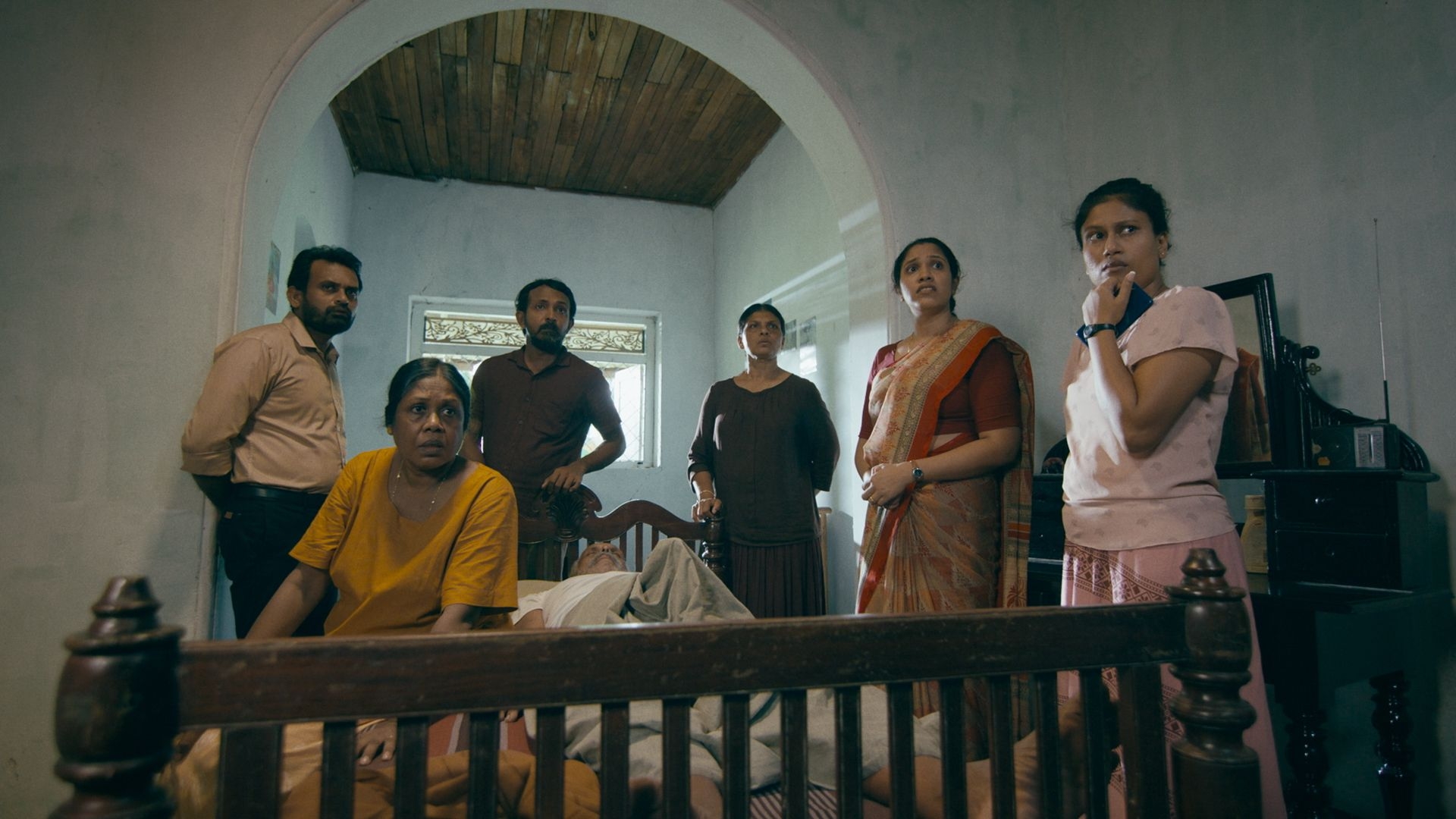
Ilango Ram’s Tantigo, a unique and daring fusion of humour and absurdity, premiered at the 27th PÖFF | Tallinn Black Nights Film Festival 2023. This remarkable debut immerses viewers in a peculiar household in provincial Sri Lanka, where a patriarch’s sudden demise leads to a hilariously dark conundrum: his body refuses to conform to the decorum expected at his funeral.

As laughter fills the air, we meet two sons grappling with their father’s unexpected ‘situation.’ Amidst their mourning, rumours and jealousy swirl, fueled by a nosy neighbour, Kamala, and a bewildered local doctor. The quest to manage their father’s lingering ‘romanticism’ becomes a farcical race against time, complete with a drunken voodoo priest and a crafty coffin maker. This exploration of familial bonds, a theme that resonates with all of us, will surely strike a chord with the audience.

What makes Tantigo a triumph is its hilarious premise and masterful narrative execution. Drawing inspiration from the absurdist style of Eugène Ionesco, the film juxtaposes mundane dialogues with outlandish situations, revealing the quiet tragedies and absurdities of life that often go unnoticed. As the audience chuckles, there’s an underlying recognition of our shared, chaotic existence.

Visually, Ram employs bold wide-angle lenses and low angles that transform the characters into almost cartoonish figures, amplifying the narrative’s absurdity. This stylistic choice, reminiscent of Yorgos Lanthimos’s The Favourite, yet with a more spacious approach, echoes the emptiness of his characters’ lives and their profound disconnect—even in familial bonds. It’s a visual treat that will surely captivate the audience.

The cast delivers standout performances that anchor the film’s humour. Kaushalya Fernando graces the mother’s bewilderment, while Priyanka Sirikumara’s big brother struggles against reality’s grip. Thusitha Laknath shines as the family’s black sheep, and Chandani Senevirathne’s Kamala offers relentless comic relief. And then there’s Ranjith Panagoda, whose stillness—marked by an awkward physicality—leaves audiences in stitches.

Tanigto represents a refreshing pivot for Sri Lankan cinema, particularly in today’s post-MeToo and post-pandemic landscape. Ilango Ram paves the way for a new wave of cinematic expression by challenging traditional storytelling methods. Just as Vimukthi Jayasundara revolutionized narrative styles with The Forsaken Land in 2005, Ram’s bold experimentation signals a vital evolution in Sri Lankan filmmaking. Tantigo is not just a film; it’s a manifesto for change, inviting future filmmakers to explore the vibrant possibilities of this new era.

#kinopear#IlangoRam#tantigo#poff#worldcinema

THE CLOUD AND THE MAN

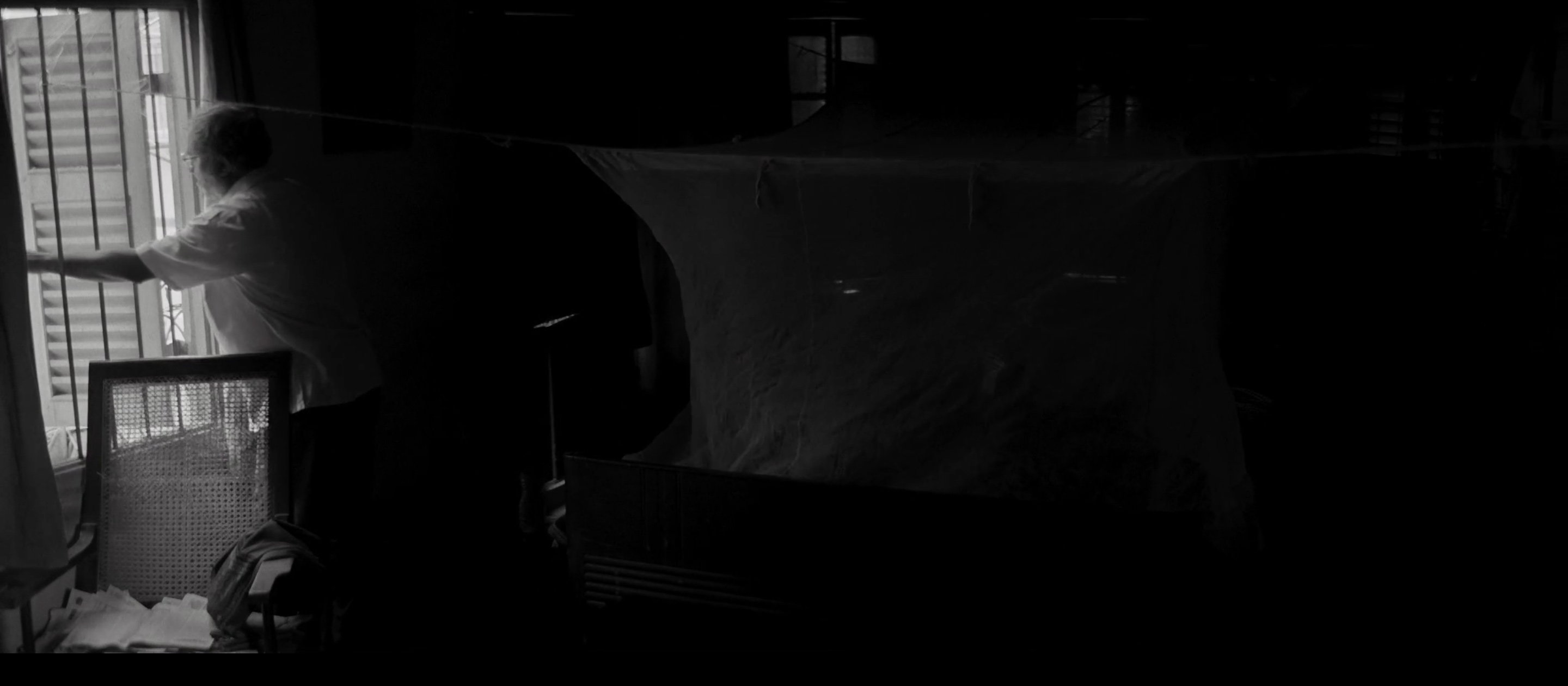
In The Cloud and the Man, Abhinandan Banerjee crafts a poignant debut that dances between the realms of the real and surreal, evoking the familiar while exploring the strange. Set against the bustling yet gritty backdrop of Kolkata, the film tells the whimsical story of Manik, a lonely middle-aged man whose life takes an unexpected turn upon discovering a cloud that seems to follow him—a metaphorical companion in his isolation.

Banerjee’s narrative unfolds through a unique lens, where the cloud emerges as a character, drifting unnoticed over the scorching land. This creative choice adds an enchanting layer to the film, allowing viewers to experience Manik’s solitude from a fresh perspective. The cloud’s presence becomes especially poignant following the death of Manik’s father, a paralyzed man grappling with dementia. In his grief, Manik’s solitary existence morphs into an intricate attachment to this celestial entity, offering a new kind of companionship in his otherwise uneventful life.

The film’s striking black-and-white aesthetic effectively captures the chaos and ugliness of urban life, serving as a visual metaphor for Manik’s internal struggles. The contrast is further heightened in the vibrant, colourful moments that bookend the film, highlighting the emotional awakening when isolation meets an unexpected connection. One of the most evocative scenes features Manik bathing in rainwater within the confines of his dilapidated bathroom, where the low-angle camera work and the sound of water create an intimate, almost tantric moment of union with the cloud. This scene resonates with the poetic essence of Tagore, reflecting the transcendence of mundane existence through a profound sensory experience.

While The Cloud and the Man treads familiar territory in its exploration of loneliness, it does so with a raw authenticity that breathes new life into these well-worn themes. The film invites comparisons to other cinematic works that have tackled isolation, yet it stands out with its unique, empathetic lens and richly detailed visual storytelling.

Though the film is not without its flaws—a tendency towards overused metaphors and moments where background music feels intrusive—the poignant character study and Banerjee’s ability to elicit empathy make it an engaging watch. The slow pace and cynical yet introspective musings like “My pastime is God” provide a reflective depth long after the credits roll.

In essence, The Cloud and the Man is more than just a film; it explores the human condition through the eyes of a solitary figure and his ethereal counterpart. Banerjee’s debut serves as a reminder of cinema’s power to illuminate the intricacies of isolation and connection, marking it as a noteworthy addition to the contemporary film landscape. If you’re seeking a thoughtful, artistic experience that merges the tangible with the intangible, this film is undoubtedly worth your time.

Director and Screenplay Abhinandan Banerjee.

Producer Bauddhayan Mukherji, Monalisa Mukherji DoP Anup Sigh Editor Abhro Banerjee Art director Bablu Singh Sound designer Abhijit Roy Music director Subhajit Mukherjee

#kinopear#cloudandtheman#poff#worldcinema

KINO PEAR

Welcome to our page dedicated to film criticism and review! Here, we dive deep into cinema, exploring the rich intersection of film, philosophy, and cultural narratives. With extensive experience in curating diverse film selections, we aim on unraveling the layers of storytelling, visual artistry, and the emotions that shape cinematic experiences. Our goal is not just to review films, but to spark thoughtful conversations about their deeper meanings and cultural impact.

Join us on this journey through the lens — where every frame tells a story, and every story opens a world of possibilities.