Tag Archives: International Film Festival of Rotterdam

Ritual, Landscape and Emotional Cartography

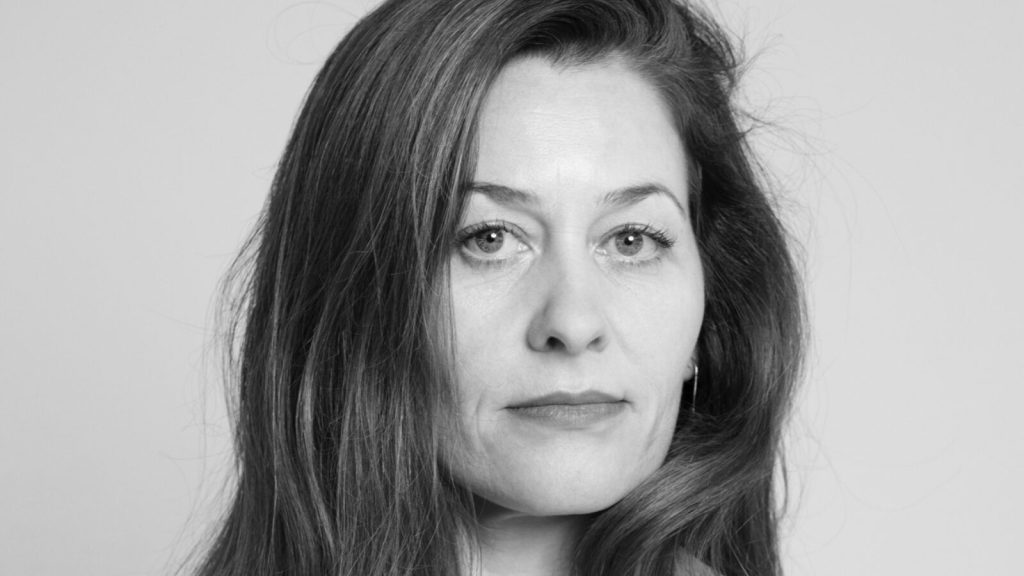
Itonje Søimer Guttormsen’s work exemplifies a filmmaking approach that blends experimental, ethnographic, and hybrid storytelling techniques, reflecting a curatorial interest in films as experiential encounters rather than traditional narratives. With Butterfly, she deepens her exploration of non-actors and ritualistic performance, positioning her within contemporary trends that prioritize sensory immersion and community engagement.

In conversation with Kinopear, Guttormsen reflects on authorship, funding risk, and the evolving relationship between filmmaker, community, and audience.

Milani Perera: Butterfly feels deeply intimate while resisting conventional narrative resolution. How did the film first take shape, and how does it connect to Gritt?

Itonje Søimer Guttormsen: The idea for Butterfly actually appeared during my final year at film school. The image of two sisters, their mother, and the island came to me very intuitively. I became particularly interested in the emotional contrasts between the sisters and how their relationship could reveal deeper psychological tensions.

However, I soon realised the project required more artistic and practical experience. That led me to develop Gritt, which took eleven years to complete. Although Butterfly was conceived first, Gritt fundamentally shaped how I later approached storytelling, especially my interest in working with real environments and real people.

Initially, Butterfly was entirely fictional. But when I travelled repeatedly to Gran Canaria and conducted fieldwork, I encountered spiritual communities and local practices that gradually transformed the film’s identity. The narrative evolved through lived observation rather than remaining purely constructed.

MP: Your films often blur fiction and documentary textures. What draws you toward working with real communities?

ISG: The emotional starting point was my own reflections on sisterhood. While the characters are fictional, sibling relationships often hold our earliest and most complex emotional negotiations.

Beyond that, I am deeply interested in entering unfamiliar environments, almost like an anthropological exploration. Gran Canaria fascinated me as a cultural meeting point, particularly as a destination strongly connected to Scandinavian migration and tourism.

The island carries layers of history — colonial traces, spiritual communities, and transient populations searching for reinvention. I wanted the film to capture how individuals attempt to construct a sense of belonging in spaces shaped by displacement and transformation.

MP: You integrate non-actors into carefully structured narrative arcs. How do you maintain authenticity without losing dramaturgical clarity?

ISG: The narrative structure was always clearly written. The character journeys and emotional trajectories were established before production began.

However, when I encountered people living on the island, their practices influenced how scenes unfolded. I avoided traditional scripts for non-actors. Instead, I explained the emotional purpose of each situation. When filming rituals, the practitioners performed genuine ceremonies, while the actors remained within their fictional framework.

Interestingly, the final film stays very close to the script, but the performances carry an unpredictability that creates emotional authenticity.

MP. The performances feel spontaneous yet emotionally precise. How did you guide actors through this hybrid process?

ISG: The actors understood their characters and the narrative structure thoroughly. They were aware of emotional intentions and dialogue direction, but were encouraged to respond organically to the environment.

Working alongside real communities introduced unpredictability, which helped actors remain emotionally present. That balance between preparation and openness became essential to maintaining both narrative cohesion and lived authenticity.

MP: Many festival programmers gravitate toward films that challenge form while maintaining emotional accessibility. Do you consider festival spectatorship when developing your projects?

ISG: Not consciously. My primary responsibility is to remain honest toward the film itself. I often describe my role as allowing the film to pass through me — protecting its integrity rather than shaping it around expectations.

Of course, I hope audiences connect with the work. I was genuinely surprised by where Butterfly premiered because I felt it existed between experimental and narrative traditions. I was grateful that festivals recognised that in-between space.

MP: Financing formally unconventional cinema often requires strong producer alliances. How did you navigate funding structures for Butterfly?

ISG: Norway currently has a strong institutional respect for arthouse cinema, largely due to filmmakers who expanded artistic boundaries over decades.

My producer was central to the process. She is extremely courageous and highly skilled in building international networks. While Butterfly is not overtly experimental, its narrative approach challenges conventional expectations, which can create hesitation among financiers.

Fortunately, Norwegian film culture still maintains a tradition of trusting directors with creative authority, and I am very grateful to work within that system.

MP: Did the budget scale introduce creative compromises compared to your earlier work?

ISG: Yes, inevitably. When a project involves larger funding structures, more voices enter the conversation. Some questioned the inclusion of spiritual elements or the use of non-professional performers.

As a director, maintaining a connection to your internal rhythm is crucial. At the same time, this film had a larger budget, which created a sense of responsibility toward the investment. I tried to ensure that any compromises strengthened audience accessibility without weakening the film’s emotional core.

MP: Your cinema has a distinct sensory and emotional signature. Do you foresee a stylistic shift in your upcoming work?

ISG: Every filmmaker evolves, but it is difficult to separate oneself from personal visual and emotional sensibilities. My future work will inevitably carry that foundation.

However, I feel my next project may explore a slightly different tonal direction — perhaps reflecting a more mature phase of my voice. It is still in a very early conceptual stage, more like an initial creative impulse rather than a fully formed narrative.

MP: From a filmmaker’s perspective, what curatorial risks do you hope festivals continue to embrace?

ISG: Festivals play a crucial role in protecting cinematic diversity. I hope they continue supporting films that are deeply personal and formally adventurous.

The most meaningful cinema often emerges from individual and unpredictable perspectives. Festivals should remain curious and courageous — allowing space for films that expand aesthetic and emotional boundaries.

With Butterfly, Guttormsen contributes to a growing body of contemporary cinema that resists binary categorisation between fiction and documentary, authorship and collaboration, narrative and experience. Her work reflects an emerging curatorial trend prioritising sensory immersion and ethnographic sensitivity over conventional dramaturgy.

Guttormsen’s filmmaking philosophy, rooted in fieldwork, trust, and emotional observation, exemplifies a shift toward authentic, community-based storytelling. Her work challenges traditional notions of authorship, favoring encounter and collaboration over imposed structure, aligning with current trends in experimental and documentary cinema that prioritize sensory immersion and ethnographic sensitivity.

For curators and programmers, her cinema exemplifies a broader shift toward films that operate as cultural dialogues rather than narrative objects, inviting audiences to inhabit environments rather than simply observe them.