
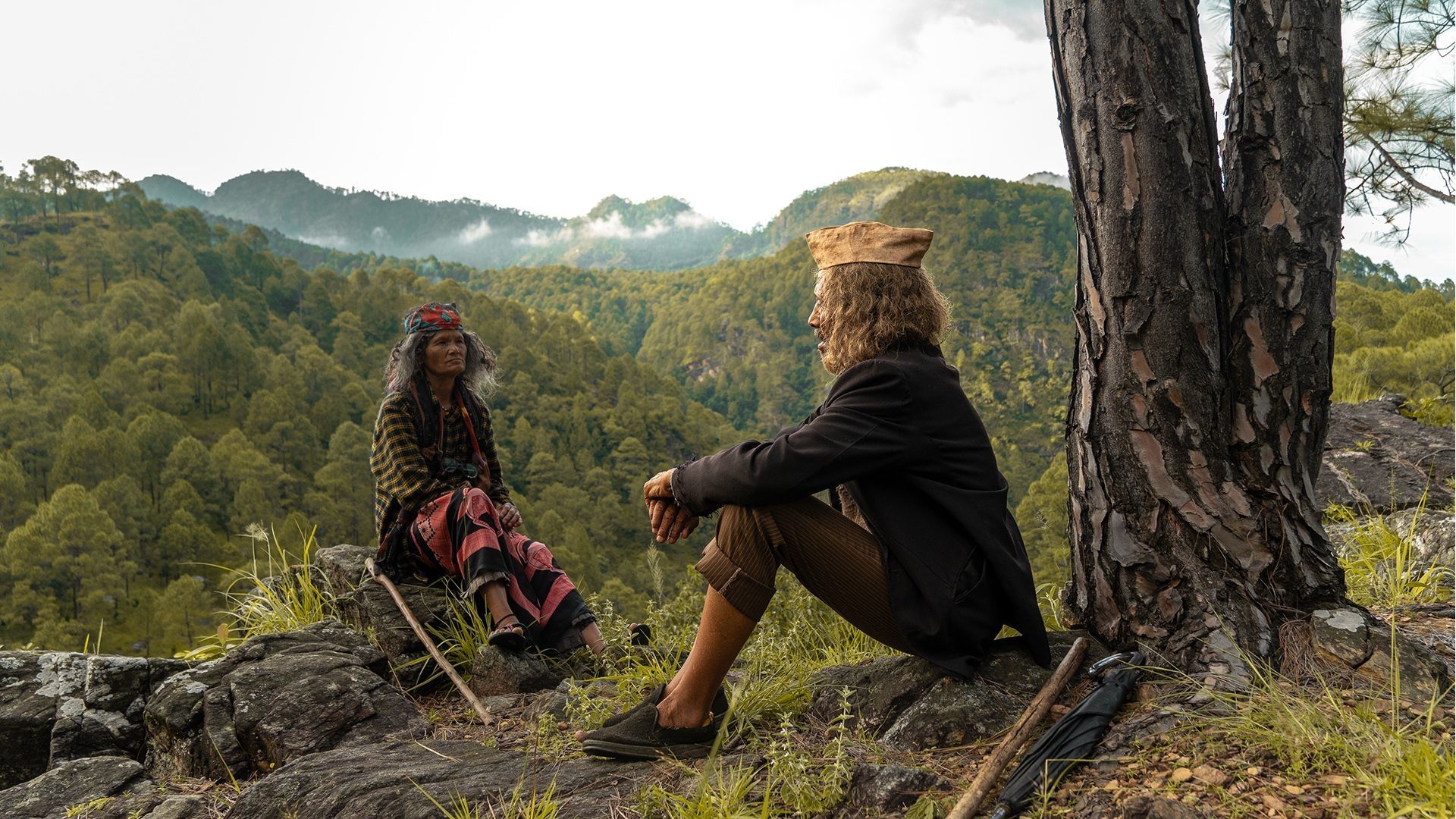
A poignant ballad of love and hope, the movie delves deep into its characters’ emotional landscapes, inviting the audience to connect and empathize.
Vinod Kapri, renowned for his powerful portrayal of society’s overlooked individuals, returns with a profound meditation on love, loss, and isolation in “Pyre“. Kapri’s latest work shines with a poignant intensity that echoes his impactful films “1232 KMs” (2015) and “Pihu” (2016). Premiering at the 28th Black Night’s Film Festival, “Pyre” is a moving exploration of an elderly couple’s fragile existence in a remote Himalayan village, delving deep into the depths of their love and the weight of their loss.
Padam Singh (Padam Singh) and Tulsi (Heera Devi), an 80-year-old couple, remain in a world that the younger generation has abandoned. Their days pass in quiet routines, their loneliness masked by fleeting moments of humour. Haunted by the absence of their son, their hope is reignited by a letter promising his return. When he finally arrives, the reunion shatters their expectations, leading them into a painful new reality. The film’s devastating climax evokes a deep, emotional response, leaving the audience with a profound empathy.
Kapri’s mastery lies in his ability to cast non-professional actors, capturing raw emotion in every frame. Despite their inexperience with the camera, the performers bring a heartwarming authenticity to their roles. The film’s pacing and direction guide them through delicate emotional landscapes, creating an international resonance that transcends cultural barriers. The finely crafted script draws the viewer in, keeping them emotionally tethered to the couple’s journey. As the final scene unfolds, the audience is left teary-eyed, the sadness lingering long after the credits roll.
The film’s beauty is amplified by the artistry of Manash Bhattacharya, the director of photography. His sweeping shots of the Himalayan landscape mirror the couple’s isolation, the vast, winding trails offering space for the audience to reflect. The close-ups of the characters—though unpolished in their acting—capture the rawness of their lives and struggles. At times, the expansive mountains seem to dwarf them. At the same time, in other moments, the crumbling, dilapidated spaces echo their emotional decay. Bhattacharya’s careful use of light adds a realistic touch, grounding the story in the simplicity of the couple’s world.
The music, composed by Mychael Danna’s “Life of Pi”, “Moneyball”, and Amritha Vaz (twice nominated for the Annie Award), gently elevates the emotional weight of the film. At times, the music swells to underscore the story’s sadness. Still, the sweeping grandeur of nature around the characters ultimately steals the show. Like the couple’s love, the landscape speaks volumes in its quiet majesty. The soft undercurrent music amplifies the emotional journey, enveloping the audience in a cocoon of tenderness and heartbreak.
It is a haunting, beautiful story that resonates deeply, leaving a lasting impact that lingers long after the screen fades to black. It is a film that speaks to the heart, capturing the fragility of life and the resilience of love in a world that is slowly fading away.
First appeared in the Asian Movie Pulse.
 KINO PEAR