Tag Archives: Tallinn Black Nights Festival

Film Review: Empire of the Rabbits (2024) by Seyfettin Tokmak

A Heartbreaking Tale of Childhood and Exploitation

“Empire of the Rabbits” is a haunting exploration of childhood innocence lost to poverty and exploitation. Premiering at the 28th Tallinn Black Nights Film Festival, the film is a powerful, slow-burning drama that explores the harsh realities faced by children trapped in a world they cannot escape.


Set in a nameless, desolate countryside, the film follows young Musa (Alpay Kaya) and his father, Beko (Sermet Yesil). After his wife’s accidental death, Beko struggles to survive. With few options left, he decides to exploit his son to gain a government disability pension. To do so, his son must pretend to be disabled. His teacher in this tragic game is Nergis (Perla Palamutcuogulları), a girl of his age also forced to mimic disability. Together, they form a bond in their shared suffering, creating a fantasy world to escape their grim reality. 

Musa’s dream is to build a rabbit empire, a refuge for rabbits he saves from traps and hound races. This empire is more than a child’s fantasy—it becomes their only escape from the adult world that seeks to control and use them. The film is a poignant tale of resistance, showing how two children use imagination to fight against a system that exploits them.

The narrative of “Empire of the Rabbits” is slow-paced, with few dialogues and mostly “dumb” silence of protagonist that is sharply contrasted with adults’ manipulative and exploitive harsh words. In a film where the narrative development blends well with semiotics, compositions and cinematography, the sparse use of dialogue is refreshing and respectful towards the audience. Spectators can take their own time to think and absorb the feature that unfolds before their eyes.

From the very opening scene, the director brings a sense of uneasiness that expands into gloom throughout the film. The plot is poignantly painted with skilful use of semiotics. The innocence and helplessness of rabbits are compared to all the children in the movie who are forced to adopt a life of handicappedness. Not only the rabbits but the hounds are also victims; their defiance and vagrancy are punished with death. It brings ominous foreshadowing of an unexpected ending.

The cinematography by Claudia Becerril Bulos perfectly complements the film’s tone. Long, wide shots of barren landscapes fill the screen, emphasizing the desolation surrounding the characters. The empty, skeletal trees are a visual metaphor for the children—both have potential for life but are stifled by their environment. The use of a greenish-yellow filter amplifies the film’s somber mood, heightening the sense of decay and hopelessness.

Alpay Kaya’s performance as Musa is a standout. His portrayal of the quiet, burdened boy is powerful. Kaya conveys a deep sense of emotional weight through his expressions, showing the internal conflict of a child caught between fantasy and the harshness of reality. His eyes, filled with pain, communicate far more than words ever could. Kaya’s mature performance adds a level of authenticity to the film, making Musa’s struggle feel all the more real.

Tokmak’s direction is sensitive and empathetic, particularly toward the child actors. His handling of their emotions is delicate, capturing both their vulnerability and resilience. The director is known for addressing social issues affecting children, and this film is no exception. It serves as a potent commentary on child exploitation, the cycle of poverty, and the way society often abandons its most vulnerable members.

“Empire of the Rabbits” is a must-see for anyone interested slow and meditative cinema that is socially conscious. Tokmak’s direction and Kaya’s performance elevate this film into something truly special—a poignant, sobering reflection on the exploitation of children and the loss of innocence.

First appeared in the Asian Movie Pulse.

Film Review: Pyre (2024) by Vinod Kapri

A poignant ballad of love and hope, the movie delves deep into its characters’ emotional landscapes, inviting the audience to connect and empathize.

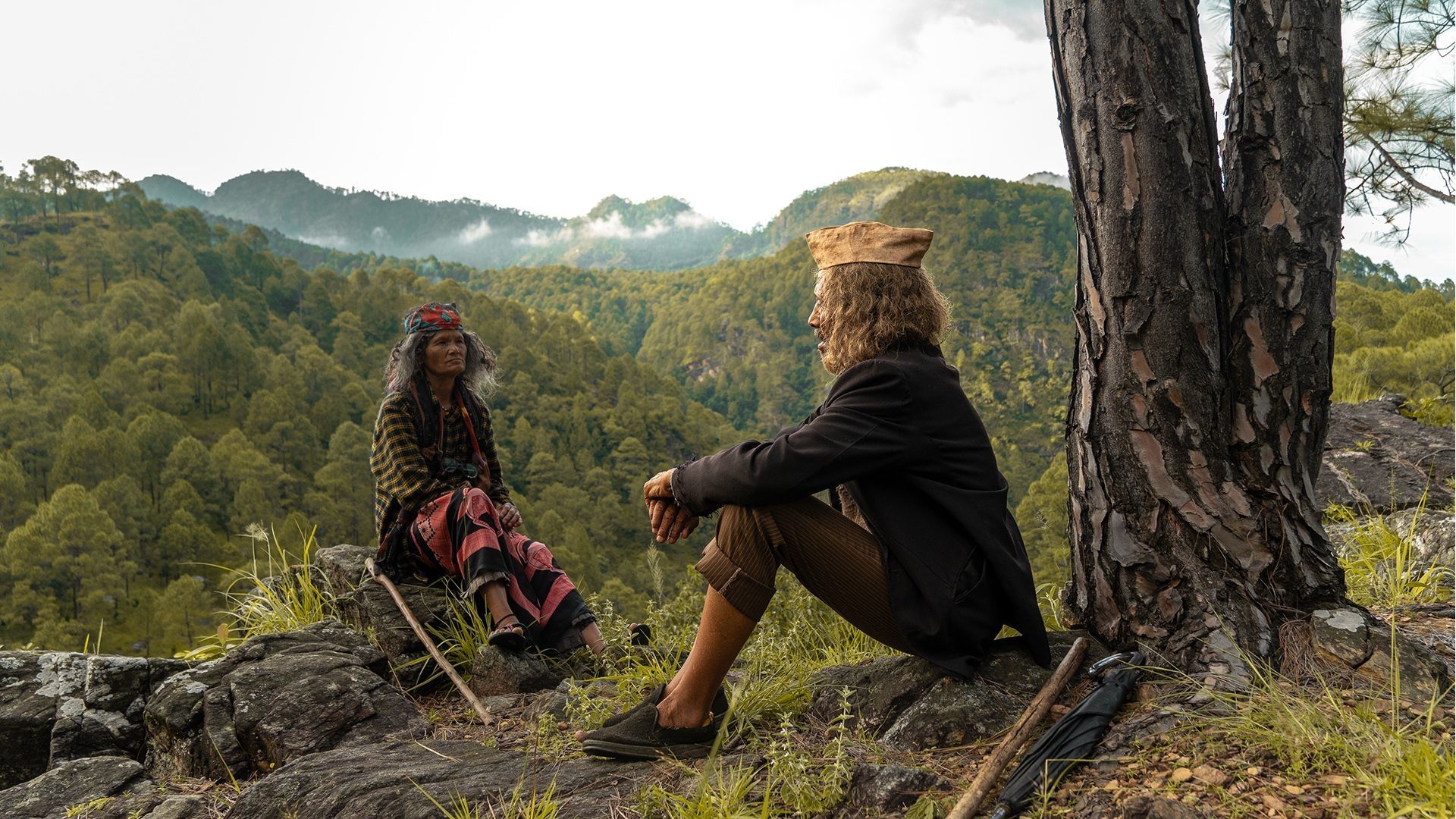
Vinod Kapri, renowned for his powerful portrayal of society’s overlooked individuals, returns with a profound meditation on love, loss, and isolation in “Pyre“. Kapri’s latest work shines with a poignant intensity that echoes his impactful films “1232 KMs” (2015) and “Pihu” (2016). Premiering at the 28th Black Night’s Film Festival, “Pyre” is a moving exploration of an elderly couple’s fragile existence in a remote Himalayan village, delving deep into the depths of their love and the weight of their loss.

Padam Singh (Padam Singh) and Tulsi (Heera Devi), an 80-year-old couple, remain in a world that the younger generation has abandoned. Their days pass in quiet routines, their loneliness masked by fleeting moments of humour. Haunted by the absence of their son, their hope is reignited by a letter promising his return. When he finally arrives, the reunion shatters their expectations, leading them into a painful new reality. The film’s devastating climax evokes a deep, emotional response, leaving the audience with a profound empathy.

Kapri’s mastery lies in his ability to cast non-professional actors, capturing raw emotion in every frame. Despite their inexperience with the camera, the performers bring a heartwarming authenticity to their roles. The film’s pacing and direction guide them through delicate emotional landscapes, creating an international resonance that transcends cultural barriers. The finely crafted script draws the viewer in, keeping them emotionally tethered to the couple’s journey. As the final scene unfolds, the audience is left teary-eyed, the sadness lingering long after the credits roll.

The film’s beauty is amplified by the artistry of Manash Bhattacharya, the director of photography. His sweeping shots of the Himalayan landscape mirror the couple’s isolation, the vast, winding trails offering space for the audience to reflect. The close-ups of the characters—though unpolished in their acting—capture the rawness of their lives and struggles. At times, the expansive mountains seem to dwarf them. At the same time, in other moments, the crumbling, dilapidated spaces echo their emotional decay. Bhattacharya’s careful use of light adds a realistic touch, grounding the story in the simplicity of the couple’s world.

The music, composed by Mychael Danna’s “Life of Pi”, “Moneyball”, and Amritha Vaz (twice nominated for the Annie Award), gently elevates the emotional weight of the film. At times, the music swells to underscore the story’s sadness. Still, the sweeping grandeur of nature around the characters ultimately steals the show. Like the couple’s love, the landscape speaks volumes in its quiet majesty. The soft undercurrent music amplifies the emotional journey, enveloping the audience in a cocoon of tenderness and heartbreak.

It is a haunting, beautiful story that resonates deeply, leaving a lasting impact that lingers long after the screen fades to black. It is a film that speaks to the heart, capturing the fragility of life and the resilience of love in a world that is slowly fading away.

First appeared in the Asian Movie Pulse.

Tallinn Black Nights 2024 interview: Dechen Roder (I, the Song)

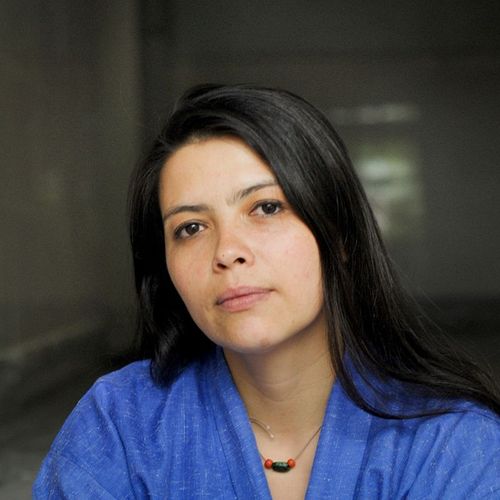
Dechen Roder (1980) is one of Bhutan’s pioneering female directors. She began her filmmaking career in 2009 with her production company, Dakinny Productions, making documentaries and short videos. Her debut feature, “Honeygiver Among the Dogs (2017), premiered at the Busan International Film Festival and won three awards at the Fribourg International Film Festival. It also became the first Bhutanese film nominated for the Pacific Screen Award. Roder also co-founded Bhutan’s only film festival, the Beskop Tshechu Film Festival.

Her latest feature, “I, the Song,” premiered at the 28th Tallinn Black Night’s Film Festival under the Critic’s Pick Competition, where she was awarded Best Director.

I had a chance to have a heart-to-heart conversation with her at the 28th Tallinn Black Night Film Festival in Estonia about her filmmaking career and her latest film, ” I, the Song. “

Congratulations on winning Best Director at the Critics’ Pick section i for “I, the Song”How do you feel about it?

Thank you so much! I’m thrilled and a bit surprised, to be honest. It’s a great honour, and I’m deeply grateful to the festival for this recognition. But really, this win belongs to the entire team—the cast, crew, and everyone involved. Filmmaking is a collaborative effort, and I’m excited to share this journey with you all.

I’d love to hear about your filmmaking journey. How did your passion for storytelling begin?

My path into filmmaking wasn’t a straight line—it was more of a series of small moments that led me here. I’ve loved stories my whole life, which started with my mother. She’s been a storyteller as long as I can remember, passing down folktales and preserving Bhutan’s oral tradition. In Bhutan, storytelling has always been a communal activity, and that tradition has really shaped my work. In my 20s, when Bhutan’s film industry began to emerge, I realized film could be the perfect medium to carry on that tradition. We didn’t have a long history of analogue cinema, so we jumped into digital filmmaking. It felt natural to pursue this, blending my love of storytelling with the possibilities of the cinematic form.

Was there a particular moment when you decided filmmaking was your path?

For me, it was always about the transformative power of film. Cinema lets you go beyond just telling a story—it can open up a whole universe and allow you to connect with an audience on a deeper level. Growing up in Bhutan, no formal film education was available, so I studied history and international relations. But when I began writing my thesis, I realized there was a way to approach storytelling academically. Yet, I quickly realized that cinema’s reach was far more significant. It’s not just about ideas but how to communicate them to a broader audience.

After realizing your calling, where did you learn the craft of filmmaking?

I’ve been making films for nearly 20 years, and I want to stress that learning is a continuous process in this field. Every film I’ve worked on has been a lesson—whether it’s a feature, a documentary, or a short video project. I’ve worked on various projects in Bhutan, and each one has taught me something new about the craft. The process is ongoing; every new film is an opportunity to improve and refine my skills. I’m excited to share this journey with you.

Let’s delve into the title of your film, I, The Song. Despite their apparent differences, the characters Nima and Meto have intertwined stories. How does the title resonate with the narrative?

The idea of doppelgangers is central to the film. Nima and Meto look strikingly similar, which mirrors a song’s theme. Much like a story, a song doesn’t truly belong to anyone. It evolves, is shared, and takes on new meanings with each retelling. In that sense, Nima and Meto start as two separate individuals, but their identities blur and merge by the film’s end. They are distinct yet inseparable—just like a song that belongs to everyone and no one at the same time.

The visual style in “I, The Song” is quite striking, particularly your use of colour and light. Nima’s world feels cold and muted, while Meto’s is bathed in warm, golden light. Please elaborate on the significance of this choice.

That was a very intentional decision. My cinematographer, Rangoli Agarwal, and I discussed how to reflect the characters’ inner worlds through the visual tone. Nima’s world is cool, almost desaturated, which mirrors her perspective on life. She sees everything in black and white, so her surroundings, her costumes, and even the lighting are all in line with that. On the other hand, Meto is full of warmth and life, so we used much more saturated colours for her. The colours shift as the film progresses, and Nima’s life intertwines with Meto’s. The colder tones start to blend into warmer shades, symbolizing the change in Nima as she embraces a new perspective. Rangoli, who has an academic cinematography background, helped bring these ideas to life on screen.

That’s a fascinating approach. On a similar note, why did you narrate Meto’s story from a third-person perspective rather than giving her a direct voice?

I had many people tell me they wished Meto’s story could have been told from her own point of view. But for me, it was important to present her as a kind of memory—fragments of her life seen through other people’s eyes. The bright, almost ethereal tones we use to portray her convey that she’s seen as a memory, not entirely tangible but rather a collection of other people’s perceptions of her. In that sense, Meto’s story is never fully hers—it’s shaped by how others remember her.

Lastly, I would like to ask about the incredible actress Tandin Bidha, who plays both Nima and Meto. How did you find her for these roles?

Tandin is a massive name in Bhutanese commercial cinema—she’s starred in over 40 films. But this is her first time in an indie film, and the roles she plays in “I, The Song” are very different from anything she’s done before. I knew she was the perfect fit for these complex characters when I saw her. Nima and Meto are polar opposites, and Tandin brought a depth and range to both roles that I hadn’t seen in anyone else. Her ability to bring these characters to life, with all their contrasts and contradictions, made her the ideal choice.

Her performance is vital to the film’s success. Thank you so much for sharing your insights with us today. “I, The Song” is a beautiful, thought-provoking film; we can’t wait to see what you do next!

Thank you! It’s been a pleasure talking to you. I’m excited for the audience to experience the film and grateful for the support.

First appeared in Asian Movie Pulse.

Tallinn Black Nights 2024 interview: Jerome Yoo (Mongrels)

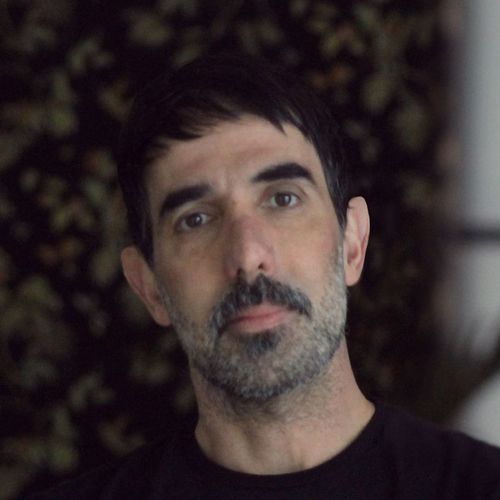
Jerome Yoo, the debut director of Mongrels, has captured international attention after winning the prestigious FIPRESCI Award and a Special Mention from the Debut Jury at the 28th Tallinn Black Nights Film Festival (PÖFF). His powerful debut – a multi-layered character study of a grief-stricken Korean family adapting to life in 1990s rural Canada – has made waves among cinephiles. Known for his evocative storytelling and surreal visual style, Yoo has already earned accolades for his short films Gong Ju and Idols Never Die, which have graced film festivals worldwide. With Mongrels, Yoo solidifies his place as one of the most exciting new voices in cinema today.

Yoo and I had an amicable conversation about getting in touch with Korean culture, starting off filmmaking and developing Mongrels at PÖFF.

MP: This is your first feature; when did it all start?
JY: My career didn’t start with this intention. When I was growing up I never dreamt about becoming a filmmaker. My journey started in theatre, and later I moved into acting, picking up minor roles in shows on Netflix, Amazon, and Apple. I was lucky enough to grow up in Vancouver, a hub for American film productions, so I was exposed to the industry early on. Over time I became more interested in writing and began crafting short films. At first I didn’t know anything about screenwriting, but I started reading a lot of screenplays and plays, which made me learn about narrative structure and plot points. When I finished my scripts I pitched them to directors, but they couldn’t identify with my narratives, and they suggested that I direct my own scripts.

MP: As an actor-turned-director, how do you tackle the challenges of directing?
JY
: Honestly, at first I didn’t fully understand what directing entailed. I was just curious and eager to learn. But once I took on my first short film, I quickly discovered that it’s all about understanding the story and conveying that vision to your team. One thing I was comfortable with was working with actors. But I relied heavily on my talented crew regarding other aspects, like cinematography or lighting. Filmmaking is a deeply collaborative process. It’s like building a sandcastle with a team – everyone contributes their expertise to bring the story to life. After finishing my first short I was overwhelmed with this accomplishment. It was like a lightbulb turned on, and I knew this was what I wanted to do for the rest of my life.

MP: Your first feature is one of the most talked about films this year at PÖFF. What was the inspiration behind Mongrels?
JY
: The inspiration for Mongrels is very personal. Like most of my work it’s rooted in my experiences, growing up between two cultures. I was born in South Korea but grew up in Canada, and that sense of being torn between two worlds shaped me. When I was younger I struggled with identity, constantly feeling like I didn’t fully belong to either culture. However, as I grew older I started visiting Korea more often, and that’s when I began connecting with my roots. It was like the pieces of a puzzle started coming together. Mongrels reflects, most probably, my final cathartic journey. It’s more than just a film; it’s a way of processing my inner conflict. This film is deeply personal to me and my family, even more so than my previous work. It felt like I had to make this film. If I didn’t, I wouldn’t be able to move forward in my career.

MP: The term ‘mongrels’ has a unique connotation in society. Why did you use this term as your title?
JY
: The title came to me almost instinctively, driven by a single image – the final scene. This scene, in which three characters stand together, lost and searching for their place in a foreign land, lingered in my mind. I then thought about how dogs, especially mongrels, are often misunderstood and seen as outcasts. This resonated with the family in the film – misunderstood, caught between cultures, and striving to find their place. The term ‘mongrel’ also carries a certain rawness, a wildness, which aligns with the film’s tone. These characters, much like mongrel dogs, are on a quest for belonging, and the title felt like the perfect metaphor to capture their journey.

MP: You just said the start of your film was the final scene. What is the significance of this?
JY
: The final scene, where the family stands on the riverbank and Hajoon howls, is really important to me. Hajoon’s howl is a pivotal moment. It’s his way of announcing to the world that he exists and is not afraid of the future. He’s the most torn throughout the film – caught between his father’s traditional values, his role as a protector to his sister, and his desire to fit in and explore adolescence. That’s why it had to be Hajoon who howled. It’s a moment of courage, a declaration of moving forward. The howl is a symbolic gesture of hope, strength, and the will to embrace the unknown. For me, it represents resilience, which seeps into other family members as they join in with Hajoon in howling.

MP: I would like to look at the narrative structure. It is divided into three chapters, each focusing on one family member. Was this format decided from the beginning or did it evolve during the creative process?
JY
: I wanted to tell this story this way. Each chapter is essential to understanding the story’s emotional core. Each one explores the innermost struggles and pains of the family members. The chapters have different aspect ratios to reflect the character’s perspective. The first chapter focuses on the father, and we wanted to make the space feel cramped and suffocating – reflecting how he sees the world, especially as someone who’s been uprooted from his home in Korea. By the last chapter, centered on Hana, there’s a sense of innocence and wonder. Her world is more dreamlike, with lots of positive space. The narrative structure, with each chapter focusing on a different family member, allows us to delve deep into their individual experiences and emotions, providing a comprehensive understanding of the family’s dynamics and struggles.

MP: When I watched your film, the first thing that struck me was how lush and green the scenes were. They’re different from the typical dark tones we often associate with South Korean cinema, also in the first mini-plot. Can you talk about the visual choices?
JY
: I’m glad you noticed that. We wanted the house to feel like a prison, a place of suffocation. It’s only sometimes a safe space for the characters; sometimes, it feels more like a cage. But as we move through the chapters, the lighting changes to reflect the emotional state of the characters. In contrast, the outside world, especially the forests, is lush and vibrant. The dogs in the film are misunderstood in their natural habitat, just like the family is misunderstood. The greenery represents the idea of freedom, of escape. It’s meant to show that there is potential for hope and safety outside their home’s confines. I think the Pacific Northwest has a natural beauty, and I wanted to capture that. In terms of tone, this visual style reflects my voice as a filmmaker, which has been shaped by my experiences in Canada, even though I’m Korean. I gravitate toward more colourful, vibrant storytelling.

MP: You started the interview thinking this could be your final visual expression of your personal stories. Would you like to share some insights about your next project?
JY
: I’m currently working on an adaptation of a graphic novel. I’ve always been drawn to fantasy and folktales, and even in Mongrels you can see hints of fantasy stories like The Pied Piper. I am a fan of folktales and fantasy genres. There is a whole world of intertextuality in this which strongly appeals to me. My next project will delve into mythological creatures and explore a whole new world of symbolism. I’m really excited to bring that vision to life.

First appeared in the International Cinephile Society.

Tallinn Black Nights 2024 interview: Viktor Taus (Girl America)

Viktor Tauš’s latest feature Girl America is a visual feast that dazzles the audience with its striking compositions, absurd characterization, and explosions of colours. The film brought energy to the gloomy November skies in Tallinn, lighting up the city with bold and imaginative storytelling. Its international premiere was a truly special event that kicked off with a moving segment from a Broadway-style show featuring 31 orphans from the film. The performance resonated deeply with the audience, setting the tone for an unforgettable screening.

In a casual yet insightful conversation with Milani Perera, Tauš shared his vision behind the film, reflecting on the powerful themes of hope, survival, and resilience that drive the story. Girl America is as much an emotional journey as a visual spectacle, leaving a lasting impression on all fortunate enough to experience it.

MP: What led you to become a filmmaker?
VT: It was never my choice – I always knew I wanted to make films. As a kid, movies were my escape, a safe space where I could understand the world from a distance. They allowed me to explore human emotions and relationships, especially since I was too afraid to experience them directly. Over time I realized that filmmaking isn’t just about mastering technical skills or storytelling – it’s about understanding the human condition. It’s a way to engage with the world and explore what makes people tick. The passion for film turned into a deep love for human nature itself. This journey was not just a professional one, but a deeply emotional one as well.

MP: What was your inspiration for being a storyteller?
VT: One of my earliest inspirations came from a Czech clown, Boris Hybner, who had a show called Some Likes Horror. It was a beautiful combination of comedy and melancholy, where you’d feel a deep sense of loneliness in the middle of the laughter. He could capture raw, vulnerable emotions and communicate them to the audience through visuals that impacted me. His ability to capture and convey raw emotions through his performances was truly inspiring. I realized that film and theatre could be powerful tools to express the complexity of human emotions, and it inspired me to use this medium to tell my own stories.

MP: You started your career as an actor. How did that transition to directing come about?
VT: It was always about the characters. Acting allowed me to explore that, but it was through directing that I could shape a whole world around a character. My first film was directly inspired by Boris Hybner’s teachings. He encouraged me to care for an elderly woman in her 90s as part of a personal journey. I spent two years with her, helping her with daily tasks, and we developed a close bond. She had been isolated in her apartment for 12 years, and I saw her honest and uncensored loneliness throughout our time together. During this time, I learned how to tell someone’s story through dialogue, presence, space, and emotions. The film I made from this experience, Eleanor Rigby from the Lesser Quarter, became my first real film school. I sold everything to make it, even my furniture. Fortunately the film was successful, and it taught me that truly understanding a character means immersing yourself in their world.

MP: Girl America is a deeply personal film for you. Can you tell us more about the inspiration behind it?
VT: The story of Girl America began 25 years ago when I met a woman we called Amerikanka. She had a significant impact on my life. We were both living on the streets of Prague after the Velvet Revolution. At that time we were part of the first group of orphans living independently. She became a source of strength for me, a beacon of hope in an empty world. Despite her challenging circumstances, she always maintained a pure heart, and her ability to hold onto her integrity amidst everything fascinated me. We became like brother and sister, sharing stories and supporting each other. Her story, her resilience, and her deep sense of hope became something I wanted to understand and explore more. It gave me a sense of purpose when I needed it most, and I decided to spend the next two decades learning about her life and how her story shaped who she became, and recreating this through art.

MP: How did the play version of Girl America evolve into a film?
VT: After years of thinking about the story, we first staged Girl America as a play. There were some setbacks, like the lead actress becoming pregnant, but we continued experimenting. We performed the play in 14 different visual versions, exploring a different approach to the same text each time. That experience helped me understand how much the environment and visual storytelling can shape the emotional impact of a story. When we brought this approach to film I collaborated with Jan Kadlec, the set and costume designer, and we continued this journey together, creating a unique look that brought the world of Girl America to life. Knowing that more than 100,000 people have seen the stage play in Czech is essential.

MP: Developing the script must have been a long process. What were the key themes you focused on?
VT: It was a journey of discovery. I kept asking myself what ‘family’ meant for the protagonist in the early stages. Was it her biological family? The orphanages she grew up in? Or the circus community that took her in? As the project developed, I realized that these questions didn’t drive the story. The fundamental core of her character is hope – her ability to believe in something more significant than the circumstances around her. This belief allowed her to act according to her moral compass, not as a reaction to her chaotic environment. As I worked on the script, I began to understand that hope wasn’t just a theme – it was the driving force behind everything she did. The film isn’t just about her struggle; it’s about how hope can transform a person, even when the world seems against them. The story was also adapted into a novel by David Jarab, and while the film is based on that, it is also my personal interpretation of her journey.

MP: The film’s visual style is very unique. Why did you choose a surrealistic approach?
VT: The film is structured to reconstruct memories which aren’t linear or clear-cut. We all remember our pasts through emotions and fragments. Whether from a privileged or disadvantaged background, we recall key moments in flashes, through colours, sounds, smells, and feelings. By telling Emma’s story this way we hoped to create an emotional truth that would resonate with everyone. We didn’t want to present her story as a straightforward narrative; instead, we wanted to evoke the experience of memory itself – how it’s shaped by emotion, personal interpretation, and how we piece together moments from our past. This approach, which includes a surrealistic visual style, made her story more relatable and universal, transcending her specific circumstances.

MP: Behind this film, there is a strong social protest. Can you tell us more about the societal issues that Girl America addresses and how it serves as a protest?
VT: I was an orphan, and my experiences parallel those of the protagonist in Girl America. The Czech orphanage system has been broken for decades – it’s fragmented across five different ministries, which means no one is fully accountable for the children in care. This lack of responsibility leads to neglect, even though there are many dedicated individuals in the system doing their best. I wanted to use Girl America to highlight childcare issues in the country, and the film reflects my frustration with the government’s lack of action. The conditions haven’t significantly improved in over 70 years, and the system remains inadequate. I hope the film sparks a conversation about the urgent need for better care, improved living conditions for children in the system, and more comprehensive support for families facing financial hardship.

Initially published in The International Cinephile Society.

Tallinn Black Nights 2024 : Javier Cutrona ( Fishgirl)

In 2024, the Critics’ Picks section of the Tallinn Black Nights Festival  two Latin American films captivated audiences with their bold, surreal storytelling. One of them was Javier Cutrona’s Fishgirl, which received the Jury’s Special Mention. In this exclusive conversation Milani Perera speaks with Javier to explore the inspirations, creative process, and profound themes behind his latest work.

MP: Javier, thank you for joining us! Let’s start at the beginning: what inspired you to become a filmmaker?
JC: It all began when I was 15, and my father bought a homemade camera. I used it to make short films with friends, just for fun. At the time I never imagined making films professionally. I studied industrial design at Cordoba University in Argentina, but everything changed when I discovered the university’s film school just three blocks away. This moment of discovery was a turning point in my life, leading me to abandon industrial design – to my father’s frustration – and pursue filmmaking. My first short film, La Cabeza, was shot on 16mm and performed well at festivals. That’s when I knew this was my path.

MP: Incredible how a small discovery can profoundly change your life. Did your background in industrial design influence your approach to filmmaking?
JC: Absolutely. Industrial design taught me about structure and aesthetics, which carry over into how I frame shots and build narratives. But with filmmaking, it’s not just about visuals but emotion and connection. That combination of precision and storytelling is something I strive for in all my films.

MP: Regarding the connection, let’s discuss Fishgirl. The film’s premise is unique. How did it originate?
JC: The inspiration for Fishgirl came from my son, Francisco, who has autism. Raising him has profoundly changed how I see the world. Society often treats differences as deficiencies, but Francisco taught me to view things differently – with kindness and a sense of wonder. His unique perspective and our shared experiences are at the heart of Fishgirl. The film’s protagonist, Camila, appears eccentric or even mad to others, but her inner world is rich, deeply connected, and transformative.

MP: That’s such a moving inspiration. Your son’s perspective mirrors Camila’s in some ways. How do you see her as a character?
JC: Camila is extraordinary. On the surface people might label her neurotic or delusional because she talks to fish and ants. But that’s not who she truly is. Her reality is shaped by her past, her traumas, and her unique perspective. Her journey in the film – recovering her memories and confronting her pain – is not just about healing. It’s about transcendence. By the end, Camila is no longer bound by the expectations of earthly love or societal norms. She’s connected to something far more significant: a universal energy, a cosmic understanding. Her journey is a testament to the power of resilience and the possibility of transformation.

MP: The mother’s presence is symbolized through the fish, right? Tell us more about the fish as a recurring motif.
JC: The fish in Fishgirl is a powerful symbol. It’s a companion for Camila, a connection to her past, and a manifestation of her mother, who she sees as a mermaid in her tales. The fish embodies tragedy and life simultaneously. I chose a marrow fish, common and not particularly beautiful, to ground the story in the real world – a sharp contrast to the ethereal nature of Camila’s journey. When the fish disappears at the end, it signifies Camila’s transformation and the resolution of her inner conflicts.

MP: The imagery of the fish aligns beautifully with the film’s visual language. Let’s talk about your use of colours; they are so striking.
JC: Colours are integral to the film’s emotional landscape. Red represents passion and violence – the colour of Alan’s brutality and the warmth of Jose’s love. Blue evokes the sea and Camila’s connection to her origins. I aimed for a neon aesthetic, blending vibrant colours with electronic music to create a surreal yet grounded atmosphere. Each colour choice reinforces the duality of beauty and pain in the story.

MP: And that duality is reflected in your editing too. The montages, especially, stand out. How did you develop that approach?
JC: I wanted the editing to reflect Camila’s fragmented reality. The parallel sequences, like the beach scene transitioning into the bloody bathroom, juxtapose the sublime with the harrowing. This contrast mirrors Camila’s journey, where moments of beauty often collide with trauma. The final montages, where Camila seems to exist in multiple places and times, are about capturing the soul’s transcendence beyond physical constraints. The soul is like Janus, the two-faced god: it simultaneously exists in the past, present, and future.

MP: That idea of timelessness extends to Edmundo, the concierge. Is he meant to symbolize something larger?
JC: Yes, Edmundo represents a kind of wisdom and connection that transcends ordinary reality. He’s not a god but has an otherworldly quality, understanding Camila in a way no one else does. The hotel’s overgrown greenery and surreal atmosphere are a microcosm of the film’s themes – chaos and order, life and decay, madness and transcendence. Every detail, from the butterflies on the walls to the plants, contributes to this symbolism.

MP: It seems like every element of the film – from characters to visuals – ties back to this theme of perception and reality. What message do you hope audiences take away?
JC: I want audiences to see that reality is deeply personal. What seems mad or broken to one person can be extraordinary to another. Pain and trauma don’t have to destroy us; they can lead to profound growth and understanding. Ultimately, Fishgirl is about finding beauty and connection amid chaos. The film’s narrative is a deep exploration of this theme, inviting viewers to reflect on their own perceptions and experiences. Camila’s journey is both tragic and uplifting, and I hope viewers feel inspired to look beyond the surface, to see the extraordinary in the ordinary. I want them to understand the importance of personal growth, and how it can turn the most painful experiences into opportunities for understanding and connection.

Originally published in the International Cinephile Society
Tallinn Black Nights 2024: Paolo Marinou-Blanco(Dreaming of Lions)

Paolo Marinou-Blanco’s Dreaming of Lions was part of the Critics’ Picks section at Tallinn Black Nights festival in 2024 as one of the second Latin American entries in the Critic’s Pick program. In this interview, Milani Perera speaks with the Greek-Portuguese writer/director about the deeply personal inspirations behind the film, and about using dark comedy to tackle the subject of euthanasia.

MP: Paolo, what inspired the story behind Dreaming of Lions?
PM: The inspiration comes from a very personal place. Years ago, my father was in the hospital, facing serious health issues, and we had conversations about euthanasia. He dealt with it through humor – making light of the situation, even joking with doctors. It was his way of coping. Now, my mother is in declining health, and we’ve had similar difficult conversations. It’s excruciating as a son, but my mother’s character and resilience inspired the protagonist, Gilda. These intimate, personal experiences drove me to explore the complexity of choosing life or death.

MP: How did you approach scripting such a sensitive subject?
PM: I’ve always been drawn to exploring dark, complex themes through dark comedy. It allows me to tackle serious social and political issues in a thought-provoking and digestible way. For Dreaming of Lions, I spent years mulling over the idea before taking two focused months to write the first draft. The hardest part was blending reality and absurdity – capturing the legal, social, and human dimensions of euthanasia while pulling the audience into uncomfortable waters with satire and tragedy. I also wanted to critique the wellness industry, which often capitalizes on human suffering in absurd ways. That balance of humor and tragedy was key to the script.

MP: Crafting the film must have presented unique challenges. How did you shape its style?
PM:
Breaking the fourth wall was intentional from the start – it gives the protagonist, Gilda, a direct connection to the audience. Her ‘partner in crime’ is Amadeo, a crucial character in the story who navigates this emotional terrain with her. Thematically, I was inspired by Hemingway’s The Old Man and the Sea. Not in literal terms, but by mirroring the protagonist’s mindset – the image of lions playing on a beach as a symbol of peace and serenity resonated deeply with me. It became a metaphor for Gilda’s unattainable longing for inner calm and the story behind the film’s title.

MP: Casting Gilda seems like a pivotal choice. How did you find the right actress for such a demanding role?
PM:
I knew I didn’t want an actress from Portugal because I needed someone who felt socially isolated – someone whose personal experience could mirror Gilda’s emotional world. By pure accident, I discovered Denise Fraga. I came across a video where she portrayed a narrative about claustrophobia and anxiety with such captivating precision – a mix of comedy and elegance. At that moment, I knew she was the one. Her age and authentic presence brought a natural connection to the script, and she perfectly embodied the character’s isolation and strength. That choice, I believe, makes Gilda’s story even more universal and relatable.

MP: Dreaming of Lions is both intimate and universal in its themes. What do you hope audiences take away from it?
PM:
At its heart, the film asks whether life is an obligation or a choice we consciously affirm. Gilda’s journey forces her to confront despair, isolation, and, ultimately, the question of what makes life worth living. There are no easy answers, but cinema’s beauty lies in creating space for reflection. I hope audiences see a bit of themselves in Gilda, walk away with their own questions, and perhaps rediscover what truly matters to them.

Originally published in the International Cinephile Society