
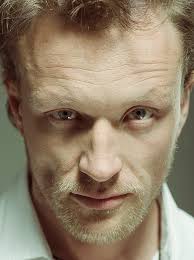
Viktor Tauš’s latest feature Girl America is a visual feast that dazzles the audience with its striking compositions, absurd characterization, and explosions of colours. The film brought energy to the gloomy November skies in Tallinn, lighting up the city with bold and imaginative storytelling. Its international premiere was a truly special event that kicked off with a moving segment from a Broadway-style show featuring 31 orphans from the film. The performance resonated deeply with the audience, setting the tone for an unforgettable screening.
In a casual yet insightful conversation with Milani Perera, Tauš shared his vision behind the film, reflecting on the powerful themes of hope, survival, and resilience that drive the story. Girl America is as much an emotional journey as a visual spectacle, leaving a lasting impression on all fortunate enough to experience it.
MP: What led you to become a filmmaker?
VT: It was never my choice – I always knew I wanted to make films. As a kid, movies were my escape, a safe space where I could understand the world from a distance. They allowed me to explore human emotions and relationships, especially since I was too afraid to experience them directly. Over time I realized that filmmaking isn’t just about mastering technical skills or storytelling – it’s about understanding the human condition. It’s a way to engage with the world and explore what makes people tick. The passion for film turned into a deep love for human nature itself. This journey was not just a professional one, but a deeply emotional one as well.
MP: What was your inspiration for being a storyteller?
VT: One of my earliest inspirations came from a Czech clown, Boris Hybner, who had a show called Some Likes Horror. It was a beautiful combination of comedy and melancholy, where you’d feel a deep sense of loneliness in the middle of the laughter. He could capture raw, vulnerable emotions and communicate them to the audience through visuals that impacted me. His ability to capture and convey raw emotions through his performances was truly inspiring. I realized that film and theatre could be powerful tools to express the complexity of human emotions, and it inspired me to use this medium to tell my own stories.
MP: You started your career as an actor. How did that transition to directing come about?
VT: It was always about the characters. Acting allowed me to explore that, but it was through directing that I could shape a whole world around a character. My first film was directly inspired by Boris Hybner’s teachings. He encouraged me to care for an elderly woman in her 90s as part of a personal journey. I spent two years with her, helping her with daily tasks, and we developed a close bond. She had been isolated in her apartment for 12 years, and I saw her honest and uncensored loneliness throughout our time together. During this time, I learned how to tell someone’s story through dialogue, presence, space, and emotions. The film I made from this experience, Eleanor Rigby from the Lesser Quarter, became my first real film school. I sold everything to make it, even my furniture. Fortunately the film was successful, and it taught me that truly understanding a character means immersing yourself in their world.
MP: Girl America is a deeply personal film for you. Can you tell us more about the inspiration behind it?
VT: The story of Girl America began 25 years ago when I met a woman we called Amerikanka. She had a significant impact on my life. We were both living on the streets of Prague after the Velvet Revolution. At that time we were part of the first group of orphans living independently. She became a source of strength for me, a beacon of hope in an empty world. Despite her challenging circumstances, she always maintained a pure heart, and her ability to hold onto her integrity amidst everything fascinated me. We became like brother and sister, sharing stories and supporting each other. Her story, her resilience, and her deep sense of hope became something I wanted to understand and explore more. It gave me a sense of purpose when I needed it most, and I decided to spend the next two decades learning about her life and how her story shaped who she became, and recreating this through art.
MP: How did the play version of Girl America evolve into a film?
VT: After years of thinking about the story, we first staged Girl America as a play. There were some setbacks, like the lead actress becoming pregnant, but we continued experimenting. We performed the play in 14 different visual versions, exploring a different approach to the same text each time. That experience helped me understand how much the environment and visual storytelling can shape the emotional impact of a story. When we brought this approach to film I collaborated with Jan Kadlec, the set and costume designer, and we continued this journey together, creating a unique look that brought the world of Girl America to life. Knowing that more than 100,000 people have seen the stage play in Czech is essential.
MP: Developing the script must have been a long process. What were the key themes you focused on?
VT: It was a journey of discovery. I kept asking myself what ‘family’ meant for the protagonist in the early stages. Was it her biological family? The orphanages she grew up in? Or the circus community that took her in? As the project developed, I realized that these questions didn’t drive the story. The fundamental core of her character is hope – her ability to believe in something more significant than the circumstances around her. This belief allowed her to act according to her moral compass, not as a reaction to her chaotic environment. As I worked on the script, I began to understand that hope wasn’t just a theme – it was the driving force behind everything she did. The film isn’t just about her struggle; it’s about how hope can transform a person, even when the world seems against them. The story was also adapted into a novel by David Jarab, and while the film is based on that, it is also my personal interpretation of her journey.
MP: The film’s visual style is very unique. Why did you choose a surrealistic approach?
VT: The film is structured to reconstruct memories which aren’t linear or clear-cut. We all remember our pasts through emotions and fragments. Whether from a privileged or disadvantaged background, we recall key moments in flashes, through colours, sounds, smells, and feelings. By telling Emma’s story this way we hoped to create an emotional truth that would resonate with everyone. We didn’t want to present her story as a straightforward narrative; instead, we wanted to evoke the experience of memory itself – how it’s shaped by emotion, personal interpretation, and how we piece together moments from our past. This approach, which includes a surrealistic visual style, made her story more relatable and universal, transcending her specific circumstances.
MP: Behind this film, there is a strong social protest. Can you tell us more about the societal issues that Girl America addresses and how it serves as a protest?
VT: I was an orphan, and my experiences parallel those of the protagonist in Girl America. The Czech orphanage system has been broken for decades – it’s fragmented across five different ministries, which means no one is fully accountable for the children in care. This lack of responsibility leads to neglect, even though there are many dedicated individuals in the system doing their best. I wanted to use Girl America to highlight childcare issues in the country, and the film reflects my frustration with the government’s lack of action. The conditions haven’t significantly improved in over 70 years, and the system remains inadequate. I hope the film sparks a conversation about the urgent need for better care, improved living conditions for children in the system, and more comprehensive support for families facing financial hardship.
Initially published in The International Cinephile Society.
 KINO PEAR