

From festivals to streaming platforms, Woods reflects on why context, audience intelligence, and creative risk still matter in a saturated screen culture
At a time when cinema is increasingly shaped by streaming platforms, shifting audience habits, and the collapse of traditional boundaries between film and television, the role of the curator has become more complex — and more consequential — than ever. Festivals are no longer simply exhibition spaces. They are cultural filters, launchpads, industry meeting points, and sites where questions of visibility, authorship, representation, and artistic value are negotiated in real time.
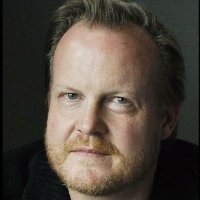
Few industry figures understand the evolving landscape as comprehensively as Rowan Woods.
Having worked across festival programming, development and commissioning, distribution and journalism. Woods has built a career navigating the intersections between art, audiences, and industry infrastructures. Her experience stretches from early work at the London Film Festival, development at BBC Films, programming for LFF and Berlinale, and acquisitions for Shudder and BFI Distribution. Most recently, Woods has been leading the Writers and Directors Labs at TIFF, working closely with emerging filmmakers as they shape projects within a rapidly changing audiovisual ecosystem
From the outside, she admits, the path may look “circuitous.” But for Woods, the through-line is clear.
“It has always been about curation in some form, and shaping the conversation around cinema for audiences,” she tells Kinopear.
That sentence defines the conversation. Woods does not treat curation as a decorative word for selection. For her, it is a professional responsibility: understanding how films meet audiences, how institutions create value, and how cultural blind spots can either be repeated or challenged.
Festival Programming Is Not Just Taste
For Woods, the first question is never simply whether a film is technically accomplished. Craft matters, but it is not enough. What distinguishes a film is authorial voice — a sense that the work carries a perspective in its writing, form, visual language, or emotional intelligence.
“Beyond craft, it’s about authorial voice,” she says.
But voice alone does not complete the curatorial equation. Context matters. A film being considered for Berlin does not enter the same environment as a film being considered for the London Film Festival, Shudder, a public broadcaster, or a streaming platform. Each space brings a different audience, different expectations, and different forms of pressure.
For Woods, this is where festival programming becomes more than personal taste.
“You’re not programming for yourself. You are programming for a particular audience.”
The point is not that curators should surrender to audience demand. Rather, Woods argues that serious programming begins with the recognition that audiences are never singular. They are public and industry-facing, local and international, adventurous and cautious, cinephile and casual. A strong programme must therefore have texture: tonal range, geographical breadth, aesthetic contrast, and room for different forms of access.
This is also where the responsibility of curation becomes clear. Programming is not only about selecting what is strong. It is also about asking what has been overlooked, whose voices have been historically excluded, and what kind of cultural balance a programme is creating.
Curation Versus Gatekeeping
The language of gatekeeping has become central to contemporary cultural debate, and Woods does not dismiss its importance. She understands why the term carries suspicion. But she also makes a useful distinction between exclusion and responsible selection.
“Curation is what we call it when it’s done well. Gatekeeping is what we call it when it’s done badly.”
This sly definition is one of the interview’s sharpest lines because it refuses a simplistic argument. Selection is not automatically oppressive; nor is openness automatically meaningful. For Woods, curation creates pathways. Gatekeeping blocks them. Curation helps audiences discover. Gatekeeping restricts access.
This distinction becomes especially relevant in an era of content overload. The problem today is no longer scarcity. Audiences are surrounded by films, series, platforms, recommendations, and algorithmic suggestions. The difficulty is knowing what deserves attention — and why.
Woods’ defence of curation is therefore also a defence of human judgement. Taste, experience, knowledge, and cultural awareness still matter because they provide something algorithms cannot: context.
Where Creative Risk Survives
Woods’ time at BBC Films gives her understanding of curation a practical institutional dimension. Commissioning is not only about artistic instinct. It involves public responsibility, talent development, financial judgement, and audience awareness.
She recalls a space where different kinds of work could coexist: a film such as Judy alongside Joanna Hogg’s The Souvenir, as well as opportunities for first-time filmmakers. For Woods, that balance is essential. Public institutions and festivals matter because they can protect forms of risk that may not survive within purely commercial logic.
“Creative risk is the place where great art flourishes,” she says.
But Woods is careful not to romanticise risk in isolation. Films still need audiences. Without that connection, experimentation can become closed, self-referential, and detached from the world it hopes to address.
This is one of the most valuable parts of Woods’ thinking: she does not oppose art and audience. She asks how institutions can hold both together.
Cinema, Television, and the Collapse of Old Hierarchies
One of the strongest parts of the conversation concerns the increasingly unstable boundary between film and television. Woods rejects the old hierarchy that places cinema at the top and television beneath it. For her, some of the most formally adventurous screen work of recent years has emerged precisely from the blurred space between the two.
“Some of the most authored and formally exciting work of the last decade has been made for television,” she says.
This matters because filmmakers now move fluidly across cinema, television, audio, theatre, podcasts, and digital forms. The more urgent question is not whether a work belongs to one category or another, but whether it carries authorship, formal intention, and emotional force.
Festivals and streaming platforms, Woods argues, can sometimes accommodate this grey area more easily than traditional theatrical distribution. A distributor may need a film to fit a clear category. A festival or streamer may have more room to experiment with hybrid forms.
For the next generation of curators, this flexibility will be crucial. Protecting cinema cannot mean refusing change. It means following cinematic language wherever it evolves.
What Emerging Filmmakers Need to Understand
Woods is especially direct when discussing emerging filmmakers. Her advice is practical, almost deceptively simple: watch more.
“You would be surprised — or horrified — by the number of emerging filmmakers who are not voraciously watching films.”
For Woods, this is not a cinephile luxury. It is professional literacy. Filmmakers need to understand what already exists, how similar subjects have been treated, what audiences are responding to, and where their own work sits within a wider artistic and industrial landscape.
She is equally pragmatic about sales agents, distributors, and industry timing. Many emerging filmmakers want to approach the market early, but first features are often “execution-dependent.” A good script or concept is not always enough. Industry partners need evidence that a filmmaker can realise the vision.
This does not mean filmmakers should wait passively. It means they need momentum: a producer, funding, a strong short film, lab support, festival interest, or some other proof that the project is becoming real. For Woods, relationships matter, but timing and execution matter just as much.
Inclusion Has to Change the Lens
Woods’ comments on inclusion are also grounded in practice rather than rhetoric. She does not frame diversity as a strand, label, or branding exercise. For her, it must become part of the decision-making lens itself.
That means programmers and curators must be trained, self-critical, and aware of cultural blind spots. It also means understanding that every programme carries a politics of visibility. To select is to shape what enters the conversation.
This is where Woods’ idea of curation becomes most serious. Curators are not neutral administrators of taste. They are cultural mediators whose decisions affect which films travel, which filmmakers are noticed, and which audiences feel invited into the space.
Why Festivals Still Matter
Throughout the conversation, Woods returns to context. A film does not mean the same thing everywhere. Its impact depends on where it appears, how it is framed, who watches it, and what cultural or political moment surrounds it.
This is why festivals still matter. They can give films a frame that platforms often cannot. They can encourage audiences to take risks, make unfamiliar work visible, and create conversations around films before they disappear into the endless flow of content.
Woods is not naïve about festivals. They can repeat hierarchies, follow trends, and reproduce exclusions. But at their best, they remain spaces where films are not only screened, but argued for.
The Future of Curation
For Woods, the next decade will demand curators who are more flexible, more alert, and more willing to think beyond inherited hierarchies of form. Cinema is no longer protected by insisting on fixed borders. It survives by recognising how storytelling changes across platforms, formats, and audiences.
“It’s our responsibility to think more broadly about storytelling and visual language,” she says.
That responsibility is the heart of Woods’ argument. Curation is not gatekeeping when it creates meaningful pathways into complexity. It is not elitism when it helps audiences discover work with intelligence and care. And it is not simply taste when it is practiced with cultural awareness.
In an industry saturated with content but often short on context, Woods makes a persuasive case for curation as one of the few remaining spaces where artistic risk, audience intelligence, and institutional responsibility can still meet.


 KINO PEAR
Leave a comment