
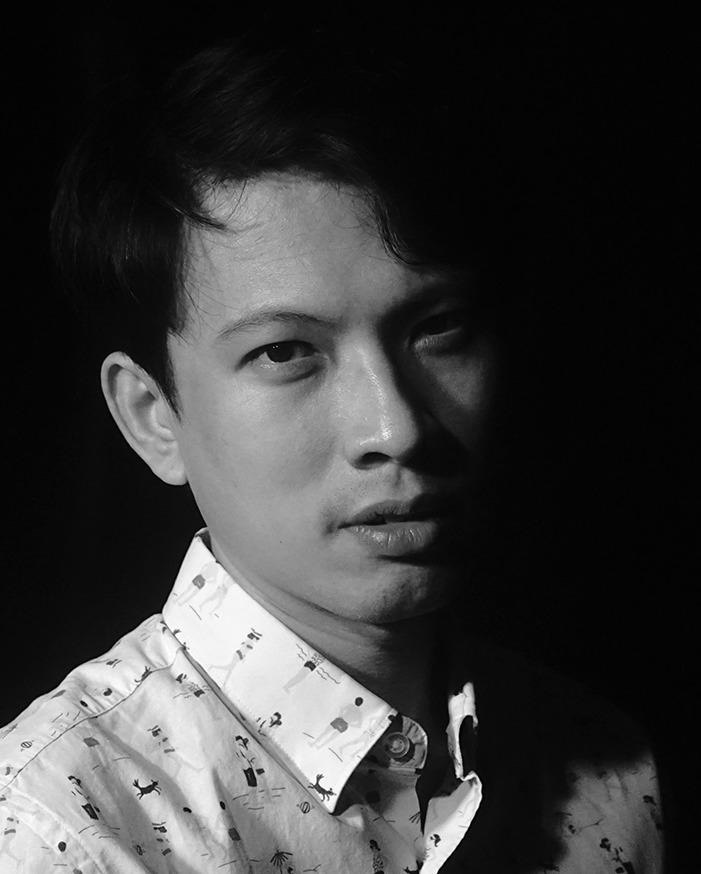
Jeremy Chua shares his perspectives on producing films, shaping SGIFF, and why festivals remain vital as spaces of discovery, emphasising his core ideas for readers to follow.
“I don’t think I’m smart enough to appreciate it.”That is what Jeremy Chua remembers his parents telling him when he asked whether they wanted to watch one of the films he had produced. It is a small line in a long conversation, but it sits near the centre of how he thinks about cinema now: who it is for, how it is framed, and why so many people are still made to feel that serious film culture belongs somewhere beyond them. In conversation for Kinopear, Chua — producer and Executive Director of the Singapore International Film Festival — speaks not only about programming or producing, but about distance: the distance between audiences and film culture, between Asian festivals and inherited prestige systems, between artists and the structures meant to support them. What interests him is how that distance might be reduced without flattening cinema into something safer, simpler, or more obedient to the market.
That tension runs through his work in both of his major roles. As a producer, he has backed filmmakers on instinct, often before prizes or consensus have confirmed their value. As a festival leader, he is trying to think through what a regional festival can still do when audiences are shaped by marketing, viewing habits are conditioned by platforms, and filmmakers increasingly calibrate their ambitions against global circuits that still grant disproportionate weight to Europe. If the article has a throughline, it is this: Chua is less interested in preserving the old mythology of festivals than in restoring their necessity. He wants the festival to function not as a badge of superiority, but as a place where people, films, and ideas can still meet properly.
An alternative beginning
Chua’s route into cinema did not begin with the multiplex, or even with narrative film in any conventional sense. It began with The Substation, Singapore’s once-radical arts space, which introduced him, as a teenager, to experimental film, installation, visual art, and unconventional artistic practice. He speaks of it less as a venue than as a formative atmosphere: a place that stood apart from official culture and made room for artists who were not easily contained by existing categories. That early encounter mattered because it expanded his sense of what cinema could be before industry, market, or institutional value had fully taken shape around it.
From there came work at the Cinematheque of the National Museum of Singapore, where retrospectives and exhibition contexts widened his frame of reference further. Later, in Paris, he worked at Lowave, a curatorial and distribution label focused on experimental film and non-Western practices. Looking back, he does not describe these years as a formal education, but as a kind of apprenticeship through proximity. “What these experiences gave me,” he says, “was this proximity to artists at the moment of not only creation, but exhibition.”
That line is one of the article’s key points. Chua did not come to the cinema through industry ambition alone; he came through the relationship among work, space, and encounter. Filmmaking, he says, later became “an extension” of those earlier experiences. It also explains why he now speaks about programming and producing in related terms. For him, neither is reducible to administration or financing. Both involve context. Both involve deciding how a work is received, what kind of language surrounds it, and whether the distance between film and audience narrows or widens.
Beyond the European benchmark
One of the sharpest ideas in the interview arrives when Chua turns to prestige. “I do worry,” he says, “that more and more filmmakers are optimising the European festival as a benchmark of cultural legitimacy and curatorial prestige.” The line lands because it names something many filmmakers across Asia recognise, even if they do not always say it plainly: that recognition is still too often imagined as something conferred elsewhere.
Chua does not deny Europe’s influence, nor the importance of major Western festivals in shaping circulation. But he is wary of what happens when regional festivals define themselves too heavily against an external hierarchy. For him, an Asian festival should not simply reproduce a prestige logic already validated somewhere else. It has to ask a more difficult question: what kinds of films matter within its own cultural context, which audiences it is speaking to, and which conversations remain urgent locally, to foster pride and confidence in regional identity.
This is what gives his SGIFF position its urgency. He is not trying to turn the festival into a smaller echo of Europe. He is trying to think through what a festival in Asia can be on its own terms — serious without being derivative, regionally rooted without becoming inward, and open to discovery without outsourcing its own standards of value. That is also why his concerns about festivals are never merely institutional. They are tied to a wider question of cultural confidence: whether Asian cinema can be encountered in Asia without still needing Europe as the final seal of seriousness.
Programming for discovery
That seriousness becomes most vivid when Chua speaks about audiences. He is wary of both elitism and simplification. He rejects the assumption that festival cinema must wrap itself in academic distance to signal importance. At the same time, he is equally uninterested in collapsing everything into ease, comfort, or generic accessibility. What matters to him is framing that inspires curiosity and a sense of welcome in the audience.
The anecdote about his parents becomes crucial. Their response — that they were not “smart enough” for the films — appears to have deeply crystallised the distance around art cinema that has been internalised. internalised, interested in proving that audiences are insufficiently educated. He is interested in dismantling the conditions that make them feel excluded in the first place. That is why he speaks about resonance and relatability, not as forms of dilution, but as ways to open a door and foster respect and motivation for exploration.
The phrasing matters. He is not talking about pandering. He is talking about conversion through encounter. Some sections, he insists, should remain more experimental, more cinephile-facing, more formally adventurous. Others can create wider pathways inward. “Different sections have their own programming logic,” he says; the point is to let audiences find “their pathway to discovery.”
His example of Silent Friend makes the argument concrete. It was not a film that conventional market logic would immediately place in a broad public lane. Yet the screening sold strongly and produced a lively, thoughtful Q&A. Chua’s conclusion is not that difficult films must be softened. It is that audiences are often more curious than institutions imagine. “I underestimated what kind of joy that even an arthouse cinema can give to a general mainstream public.”
This may be one of the most useful ideas in the conversation for younger programmers. Access and seriousness are not opposites. The work lies in how a film is placed, contextualised, and welcomed into public life.
Between the festival and the market
Chua is equally clear-eyed when contextualising the gap between what festivals celebrate and what the market can sustain. He does not romanticise that tension, nor pretend it can be resolved by good intentions. But he does believe the festival is romanticising places where the tension can be actively worked on. Q&As, careful section placement, live encounters, press framing, and the right public context all matter because they help a film become legible beyond the screening itself. “Every film has an audience,” he says, whether that audience is small, large, or somewhere in between.
What makes that sentence persuasive is that it comes from a producer, not from an idealist speaking only in abstractions. Chua knows films do not move through the world on artistic merit alone. They move through advocacy, context, relationships, and demand formation. That is why he speaks of the festival not only as a platform of celebration, but as a place where a filmmaker can become “seen, wanted, and publicised and demanded by an audience.” The wording is blunt, but useful: a film’s life after the festival is part publicised, part festival’s work.
The same logic shapes how he talks about industry guests. SGIFF brings in distributors, co-producers, sales agents, commissioners, and other decision-makers, but Chua is careful about the kind of meeting culture he wants to foster among them. Before inviting people, he says, the festival tries to establish whether they are genuinely interested in Asian cinema and in working with the region. He is openly sceptical of empty professional performance. “I’m really against that kind of performative, transactional festival meetings.”
That line clarifies something important. Networking is not, for him, a dirty word. What he objects to is networking emptied of consequence — the appearance of opportunity without commitment. The festival should create encounters that can actually alter a project’s trajectory, not just decorate it with the appearance of circulation.
Producing by instinct
Asked what makes him commit to a filmmaker, Chua answers in a line that could easily stand alone: “It’s always instinctive. It’s never calculated.” He speaks about being drawn toward work that reveals a distinctive cinematic intelligence immediately, citing filmmakers such as Muhammad Abdullah Saad, Pham Thien An, Jow Zhi Wei, and Rafael Manuel. What he values is not polish for its own sake, but the force of a voice — something unmistakably there, even before the outside world confirms it.
That instinct is inseparable from timing. Chua often commits before prizes, before applause, before consensus. Trust, in his account, is built partly through that early allegiance. A filmmaker understands your belief differently when it arrives before everyone else’s.
Yet the most revealing part of his producing philosophy comes when he speaks about collaboration. Not all producers, he notes, come to a project with the same priorities. Some are creatively aligned; others are functional, strategic, or grant-driven. In that landscape, one of his main responsibilities is to defend the director while still listening carefully to outside feedback. He describes the work less as loyalty in the abstract than as a diagnosis. A piece of feedback may not name the real problem directly; it may merely indicate where some underlying tension lies. His analogy is surprisingly precise: neck pain may originate lower in the spine.
That is an unusually sharp way of describing the process of producing. It suggests that the producer’s work is not simply to secure resources or manage personalities, but to interpret pressure accurately — to translate disagreement, protect the work, and distinguish between surface reaction and structural issue.
Authenticity, censorship, and dialogue
The conversation deepens again when Chua turns to authenticity. As Southeast Asian cinema becomes increasingly visible internationally, are certain narratives being shaped for global consumption? “I think it happens,” he says. He acknowledges that filmmakers naturally think about borders, development platforms, and co-production contexts when they want their work to travel.
But he rejects the idea that internationalisation automatically destroys a film’s truth. The real question, for him, is whether the work preserves internationalisation he is particularly cutting: “People can spot thickness very easily.” He means that audiences and professionals can often sense when a project has been built around trend, issue-fashion, or grant logic rather than lived knowledge or a genuinely held perspective. It is one of the most useful warnings in the interview because it avoids both cynicism and innocence. Calculation is visible. So is conviction.
On censorship, Chua is similarly pragmatic. Festivals in Asia, he notes, often depend on national funding and cannot pretend politics sits outside the frame. But he also insists that “the festival needs to be a space of dialogue.” His position is neither polemical nor submissive. It rests on the belief that difficult films should be met through informed moderation and respectful argument rather than panic or pre-emptive silence. Even SGIFF’s compromises — keeping a censored film in the official selection while not ticketing it — reflect that broader logic: preserve the possibility of recognition, keep the conversation open, and refuse to reduce the festival to either spectacle or fear.
Against the default setting
All of this leads back to Chua’s wider view of what festivals are for now. He argues that audiences increasingly mistake their appetites for free choice when those appetites are heavily shaped by marketing, publicity, IP logic, and the industrial capture of attention. “Audiences today don’t really know that their entire appetite is really being dictated by marketing, PR, and advertising more than actually what they want to watch.”
In that environment, the festival becomes a counterweight. Not because it rejects pleasure, but because it restores a degree of agency. It gives equal seriousness to films already amplified by the culture machine and to those whose value is harder to package. It creates communal habits of attention through screenings, waiting, conversation, Q&As, and the slow social life around cinema-going.
That is the strongest throughline in Chua’s thinking, whether he is speaking as a producer or as a festival leader. He is concerned with what allows a work to meet people properly: the right context, the right framing, the right trust, the right company. He is suspicious of empty prestige and empty accessibility alike. What he wants is harder to sustain — a festival that takes cinema seriously without turning seriousness into distance, and a producing practice that protects filmmakers without forcing them into ready-made shapes.
For new filmmakers and film students, this conversation is more than a profile. It becomes a map of tensions worth understanding early: between art and market, instinct and strategy, authenticity and trend, dialogue and regulation, regional urgency and international validation. And for anyone watching how Asian festivals are redefining themselves, it offers a clear sense of where SGIFF under Jeremy Chua may want to stand: not as an echo of Europe, but as a festival thinking seriously about its own audience, its own region, and the alternative spaces cinema still needs





Leave a Reply